Spicy Pork Stir Fry with Green Beans: A Sichuan Classic You Can Make Tonight

Spread the love

Spicy pork stir fry with green beans is a 20-minute Sichuan classic featuring blistered beans, ground pork, and málà spices. Get the recipe, expert tips, and the science behind the flavors.
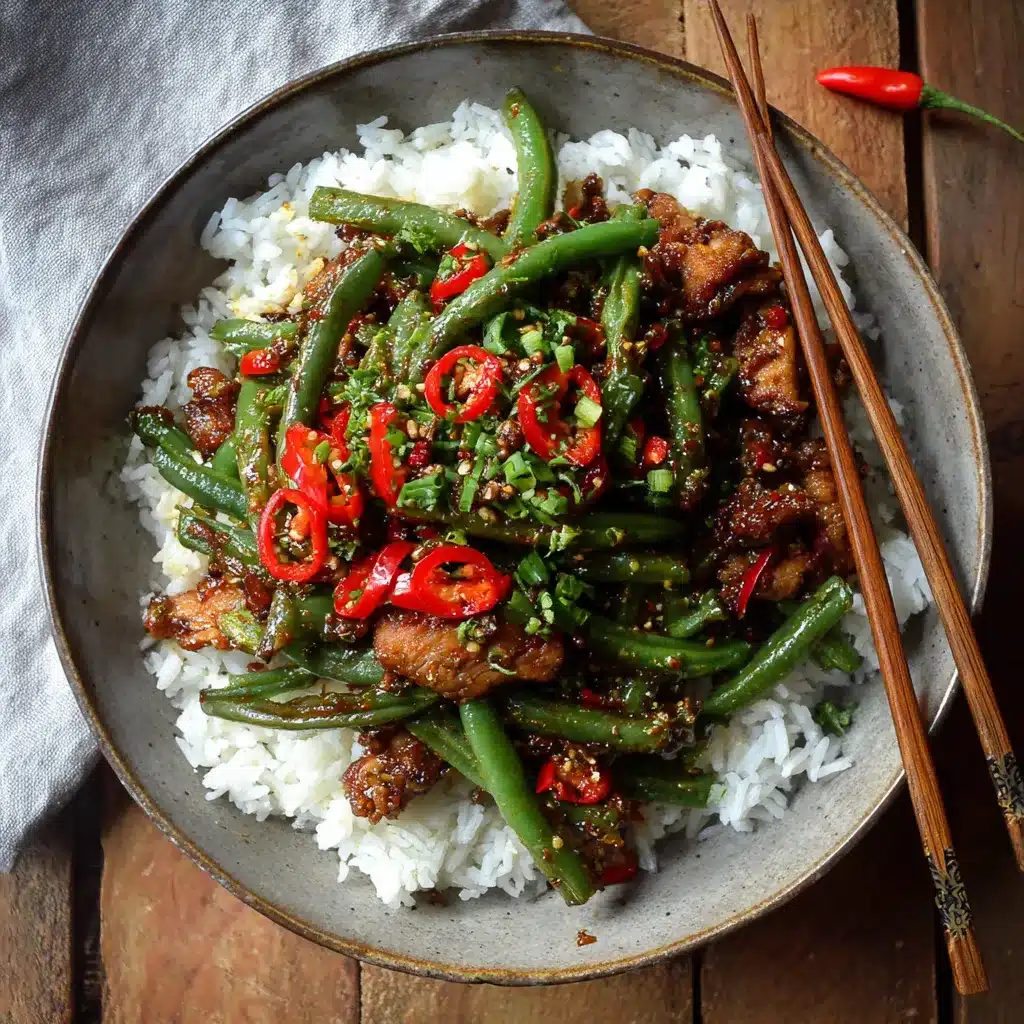
Spicy Pork Stir Fry with Green Beans - A Sichuan Classic You Can Make Tonight
Spread the love
Spicy Pork Stir Fry with Green Beans - A Sichuan Classic You Can Make Tonight
Spicy Pork Stir Fry with Green Beans – A Sichuan Classic You Can Make Tonight

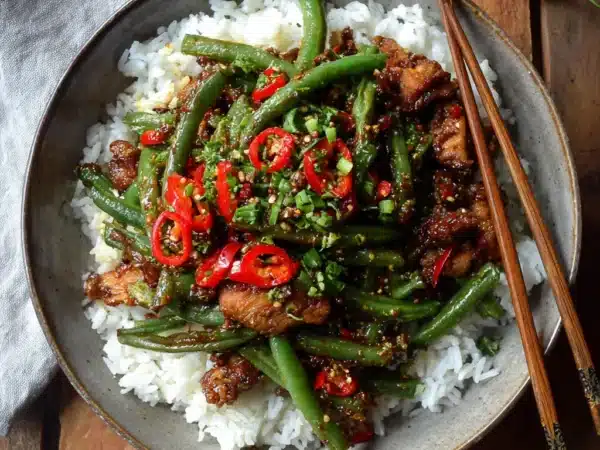
Spicy pork stir fry with green beans is a high-protein, 20-minute weeknight meal rooted in the Sichuan dish Gan Bian Si Ji Dou, or dry-fried four-season beans. The combination of ground pork, blistered green beans, Sichuan peppercorns, dried red chilies, and garlic produces a dish with layered heat, crunch, and savory depth that rivals restaurant versions. According to Persistence Market Research, the US Asian food market reached $37.2 billion in 2024 and is projected to grow to $51.3 billion by 2031, driven in large part by home cooks tackling exactly this kind of recipe. With a few quality spices and the right technique, this dish comes together fast and delivers serious flavor.

This recipe guide breaks down the best cuts of pork, the science behind the spices, and the one technique every top recipe agrees on: charring the green beans before anything else hits the wok.

Why This Dish Works: The Sichuan Tradition Behind Dry-Fried Green Beans

Spicy pork stir fry with green beans traces its roots to Sichuan province, where the original preparation is called Gan Bian Si Ji Dou (干煸四季豆). The dish gets its character from dry-frying, a technique where green beans cook in a small amount of oil over high heat until their skins blister and wrinkle. Omnivore’s Cookbook describes it as “somewhere between pan searing and deep frying, using less oil with a longer cooking time to slightly dehydrate food, creating a crispy and charred surface.”

The original version, documented in Mrs. Chiang’s Szechwan Cookbook from the 1970s, called for frying the beans over two hours until completely shriveled. Modern home cooks get similar results in 5 to 8 minutes with higher heat. Ground pork is the traditional protein, broken into flavorful bits that absorb the chili-laden sauce and coat every bean.

This is one of the earliest Sichuan dishes to cross over into mainstream American Chinese restaurant culture. You’ll see it listed as “Sautéed String Beans” on menus across the country. But the home version, built on quality whole spices and proper technique, outperforms most restaurant takes.

Best Cuts of Pork for Stir Fry

Choosing the right cut of pork makes a real difference in texture and taste. Here’s how the most common options compare for this spicy pork stir fry:

Ground pork is the traditional choice for this dish. It breaks into small, flavorful bits, absorbs sauce quickly, and cooks in just 3 to 4 minutes. Look for ground pork with about 15 to 20 percent fat content for the best balance of flavor and texture.

Pork shoulder (pork butt) is the top pick among Chinese cooking authorities like the Woks of Life for sliced stir-fries. It has the most marbling, stays juicy at high heat, and costs less than leaner cuts. Slice it thin against the grain for best results. A pro tip from multiple sources: partially freeze the shoulder for 20 minutes before slicing. This firms the meat just enough for paper-thin, uniform cuts.

Pork tenderloin is the leanest option, classified as “extra lean” by the USDA with less than 5 grams of fat per serving. It works well when velveted, a technique where you toss sliced meat with cornstarch, a splash of Shaoxing wine, and a drizzle of oil before cooking. This creates a thin protective coating that keeps lean cuts from drying out at high heat.

Pork delivers standout nutrition beyond protein. A single serving provides 40 to 80 percent of your daily thiamine (vitamin B1), which is 19 times more thiamine than the same amount of beef, according to USDA nutritional data.

The Spice Profile: What Makes This Stir Fry Taste So Good

The flavor of a great spicy pork stir fry comes from layering aromatics and spices at different stages of cooking. Here’s what goes in and why each ingredient matters.

Sichuan Peppercorn: The Numbing Tingle

Sichuan peppercorn is the defining spice in this dish, and it works differently from any other seasoning in your kitchen. It isn’t a true pepper at all. It’s the dried husk of the prickly ash shrub (Zanthoxylum), and it contains zero capsaicin, which means zero Scoville heat units.

The numbing “má” sensation comes from a compound called hydroxy-alpha-sanshool, which works through a unique neurological pathway. Research by Hagura et al. (2013, Proceedings of the Royal Society B) found that sanshool inhibits potassium channels in sensory neurons while simultaneously stimulating the same touch receptors (Meissner corpuscles) that detect gentle vibration. The measured sensation registers at approximately 50 Hz on the tongue. Harold McGee compared it to “touching the terminals of a nine-volt battery to the tongue.”

ORAC antioxidant testing shows Sichuan peppercorns carry over 300 percent more free-radical scavenging activity than black pepper. A 2023 study from Southwest University in Chongqing found that Sichuan pepper compounds boosted beneficial gut bacteria including Bifidobacterium and reduced inflammatory markers in animal models.

For this recipe, toast whole peppercorns in a dry pan for about 30 seconds (never longer than a minute, or bitterness develops), grind them immediately, and use them as a finishing spice. Sanshool is oil-soluble, so infusing the peppercorns in hot oil at the start of cooking distributes the numbing quality throughout every bite. Both red Sichuan peppercorns (warmer, more floral) and green Sichuan peppercorns (brighter, more citrusy, more intensely numbing) work beautifully here.

Dried Red Chilies: Fat-Soluble Heat

Capsaicin, the heat compound in chili peppers, binds to the TRPV1 receptor, which normally activates at temperatures above 43°C (109°F). Your brain literally perceives burning heat, even though no actual temperature change occurs. Capsaicin concentrates in the white pith, not the seeds.

The key to getting maximum heat from dried chilies in stir fry is blooming them in oil. America’s Test Kitchen found that pepper-infused oil contained more than double the capsaicin of pepper-infused water, because capsaicin is fat-soluble. Keep the oil temperature between 130 and 150°C (266 to 302°F) when blooming. Above 220°C, capsaicinoids break down and lose potency.

Common dried chilies for this dish include Facing Heaven peppers (30,000 to 50,000 SHU with a smoky, slightly fruity flavor) and Tianjin peppers (50,000 to 75,000 SHU with clean, sharp heat). Spice Station carries a wide range of dried chiles for exactly this kind of cooking.

The Málà Synergy: Why Numbing and Spicy Work Together

When Sichuan peppercorn combines with chili pepper, something greater than the sum of the parts happens. The sanshool temporarily reduces pain sensitivity by desensitizing touch receptors, which paradoxically allows you to consume more intense chili heat comfortably. Your brain processes both the numbing and the burning along separate neurological pathways at the same time, creating a layered, multidimensional experience impossible with either spice alone. This is málà (麻辣), the cornerstone flavor principle of Sichuan cooking.

“Sichuan cuisine has become the new champion of Chinese food abroad,” writes Fuchsia Dunlop, the first Westerner to train at the Sichuan Higher Institute of Cuisine in Chengdu. “While once the lighter flavours of Cantonese cooking held sway in global Chinatowns, this spicy upstart has conquered hearts and palates not only in great cities like Melbourne, London and New York, but all over the world.”

Garlic: Timing Is Everything

Crushed garlic produces allicin, a powerful flavor and health compound, through the combination of alliin and the enzyme alliinase. According to a 2018 study from the University of Zagreb, allicin peaks at approximately 5 minutes after crushing, and pressing garlic yields 30 percent more allicin than mincing.

In stir-fry, add garlic late. Just 30 to 60 seconds before liquid or other ingredients go in. Garlic’s high sugar content causes it to burn fast at wok temperatures. Sautéing reduces allicin by up to 90 percent. The best approach is to crush garlic, let it rest at room temperature for 5 minutes, then add it to the wok at the very end of cooking for maximum flavor and health benefits.

Ginger: Three Compounds in One Root

Fresh ginger’s primary pungent compound, [6]-gingerol, transforms depending on cook time. A quick flash in the wok keeps gingerol intact for a sharp, bright bite. Two to five minutes of cooking converts gingerol into shogaols, which are roughly twice as pungent (rated at approximately 160,000 SHU). Longer cooking produces zingerone, which is mellower and spicy-sweet. This chemical cascade is exactly why ginger tastes different depending on when it hits the pan.

A 2019 clinical study of 70 rheumatoid arthritis patients found that 1.5 grams of ginger powder daily for 12 weeks significantly reduced inflammatory markers (Clinical Rheumatology). Fresh ginger contains the most bioactive gingerols and is always the better choice over powdered for stir-fry.

Chinese Five-Spice Powder: Balanced by Philosophy

Chinese five-spice powder brings together star anise, cloves, cassia cinnamon, Sichuan peppercorn, and fennel seeds. The blend is rooted in Traditional Chinese Medicine’s Wu Xing (五行) Five Elements philosophy, where five flavors (sweet, bitter, sour, salty, pungent) correspond to wood, fire, earth, metal, and water.

Five-spice complements pork specifically because its fat-soluble aromatic compounds dissolve into pork’s higher fat content. Cloves (eugenol) are the major antioxidant contributor, and the anethole present in both star anise and fennel creates a cohesive bridge between the other flavors. Dry-toast the blend in oil for 30 seconds to release up to 40 percent more aromatic compounds.

Why Blooming Spices in Oil Matters

This is the single most important technique for maximizing flavor from any spice in stir-fry cooking. Most spice flavor compounds are fat-soluble, not water-soluble. America’s Test Kitchen laboratory testing found that spice-infused oil contained 10 times more flavor compounds than water-infused preparations.

During blooming, heat ruptures spice cell walls, oil penetrates and dissolves trapped essential oils, volatile aromatics release into the air, and Maillard reactions create entirely new flavor molecules. The fat-based distribution then coats all ingredients and the tongue, delivering even, consistent flavor in every bite.

This is also why freshly ground spices make such a difference. According to a 2021 study published in Food Chemistry Journal (Vol. 342), pre-ground spices lose up to 60 to 80 percent of their aromatic compounds within 3 to 6 months. Bright, high-note aromas like citrus and floral disappear first. Heavier bitter and woody notes persist, which explains why old spices taste dusty instead of complex. Freshly ground black pepper shows 200 percent more pungency than pre-ground, and freshly ground cumin releases 3 times more aroma. Whole spices from a quality source like Spice Station’s spice collection retain their freshness for 1 to 3 years.

How to Char Green Beans (Don’t Skip This)

Every top-performing recipe for this dish agrees on one thing: charring the green beans is non-negotiable. RecipeTin Eats states directly, “Don’t skip charring the beans, it’s the defining feature of this stir fry.”

The goal is blistered, slightly wrinkled skin with bright green flesh underneath. Heat a wok or large cast-iron skillet over high heat. Add a thin layer of oil. Spread the beans in a single layer and leave them alone for 2 to 3 minutes until the undersides blister. Toss and repeat. Total cook time is about 5 to 8 minutes. The beans should be tender-crisp with charred spots.

This method accomplishes two things. First, the high heat triggers Maillard reactions on the bean surface, creating hundreds of new flavor compounds that taste sweet, nutty, and slightly smoky. Second, the partial dehydration concentrates the beans’ natural sugars and removes excess moisture that would otherwise make the finished dish watery.

Green beans bring real nutrition too. Per 100 grams (USDA data), they contain just 31 calories along with 40 percent of your daily vitamin K, 25 to 27 percent of your daily vitamin C, and a glycemic index of just 20. They’re also classified as low-FODMAP, making them a friendlier choice than broccoli for those managing digestive sensitivity.

Spicy Pork Stir Fry with Green Beans Recipe

Prep time: 10 minutes | Cook time: 12 minutes | Servings: 4

Ingredients

  • 1 pound ground pork (or thinly sliced pork shoulder)
  • 12 ounces green beans (string beans), trimmed and cut into 2-inch pieces
  • 3 tablespoons soy sauce (divided: 2 tablespoons for marinade, 1 for sauce)
  • 1 tablespoon Shaoxing wine (or dry sherry)
  • 1 tablespoon hoisin sauce
  • 1/2 teaspoon dark sesame oil
  • 1/4 cup chicken stock
  • 1/2 teaspoon arrowroot or cornstarch
  • 3 tablespoons peanut oil (or other high-smoke-point oil)
  • 6 to 8 dried red chilies, snipped in half with seeds shaken out
  • 1 teaspoon whole Sichuan peppercorns
  • 3 cloves garlic, pressed and rested 5 minutes
  • 1-inch piece fresh ginger, minced
  • 3 scallions, sliced (white and green parts separated)
  • Optional: 1/2 teaspoon Chinese five-spice powder
  • 1/4 teaspoon white pepper
  • Steamed jasmine rice for serving

Directions

Step 1: Marinate the pork. In a bowl, combine the ground pork with 2 tablespoons soy sauce and the white pepper. Mix well and set aside while you prep the rest.

Step 2: Make the sauce. Whisk together the chicken stock, hoisin sauce, remaining 1 tablespoon soy sauce, Shaoxing wine, arrowroot, and sesame oil. Set aside.

Step 3: Char the green beans. Heat the wok over high heat until smoking. Add 2 tablespoons of peanut oil. Add the green beans in a single layer. Cook without stirring for 2 to 3 minutes until blistered on the underside. Toss and continue cooking for another 3 to 5 minutes until wrinkled and charred in spots. Transfer to a plate.

Step 4: Bloom the spices. Add the remaining tablespoon of oil to the wok. When it shimmers, add the dried chilies and Sichuan peppercorns. Stir for about 15 to 20 seconds until the chilies darken slightly and the oil becomes fragrant. If using five-spice powder, add it here for a quick 5-second toast.

Step 5: Cook the pork. Add the marinated pork to the wok. Break it into small pieces with a spatula. Cook for 3 to 4 minutes until browned and crispy at the edges. Add the scallion whites and ginger. Stir for 30 seconds.

Step 6: Add garlic and finish. Push the pork to the sides, add the pressed garlic to the center, and stir it into the oil for about 15 seconds. Return the green beans to the wok. Pour in the sauce. Toss everything together for 1 minute until the sauce coats the pork and beans. Top with scallion greens. Serve immediately over steamed rice.

Pro Tips from the Experts

Spicy Pork Stir Fry with Green Beans - A Sichuan Classic
Spicy Pork Stir Fry with Green Beans – A Sichuan Classic

“When a stir-fry has been correctly made, they say that it has ‘wok hay,'” writes James Beard Award-winner Grace Young, dubbed “The Stir-Fry Guru” by the New York Times. “A dish that has ‘wok hay’ is a quintessential balance of texture, flavor, and seared aroma.”

J. Kenji López-Alt, author of the James Beard Award-winning cookbook The Wok, puts it simply: “When it comes to producing quick, flavorful, and versatile meals, the wok beats every other pan in the kitchen, hands down.”

To get closer to wok hei at home, López-Alt recommends a well-seasoned carbon steel or cast iron pan. “There is a particular flavor that comes out of using well-seasoned carbon steel,” he explains, “a particular sort of deeper flavor that you get when you cook out of carbon steel that comes directly as a result of the chemical reactions between the food and the surface of the pan.”

Nutritional Profile: A High-Protein, Nutrient-Dense Meal

A single serving of this spicy pork stir fry delivers 250 to 350 calories with 20 to 34 grams of protein (40 to 68 percent of your daily value). That protein count, combined with the fiber from green beans and the anti-inflammatory properties of the spice profile, makes this a solid weeknight choice.

A meta-analysis published in the British Journal of Nutrition found that capsaicin supplementation significantly decreased BMI, and the compound can boost metabolic rate by up to 5 percent (Piedmont Healthcare). Research on stir-frying as a cooking method found it preserves 78.9 percent of vitamin C, compared to significant losses from boiling. The small amount of cooking oil also helps your body absorb the fat-soluble vitamins A, D, E, and K from the green beans.

The 2,000-Year Story of Stir Fry and the Wok

The Chinese character for stir fry, 炒 (chǎo), first appears on bronze vessels from the Eastern Zhou period (771 to 256 BC). Archaeological evidence from the Han Dynasty (206 BC to 220 AD) shows woks alongside thinly sliced food, and the earliest written stir fry recipe appears in the 6th-century agricultural manual Qimin Yaoshu: scrambled eggs. By the Song Dynasty (960 to 1279), Chinese cooks had developed roughly a dozen stir fry techniques and shifted from animal fats to vegetable oils, enabling the higher temperatures that define wok cooking today.

Grace Young, whose family’s 1949 wok is now displayed at the Smithsonian National Museum of American History, calls the wok the only cooking utensil “that has been used continually for over 2,000 years.”

Pork and Chinese cooking have an even deeper connection. Pigs were among the earliest domesticated animals in China, with evidence of domestication going back 8,000 to 9,000 years. The Chinese character for “home” or “family” (家, jiā) places the character for “roof” over the character for “pig,” created approximately 3,500 years ago. In Chinese, the word for “meat” (肉, ròu) means pork by default. Every other meat requires a qualifier. China today consumes roughly 50 percent of all pork produced worldwide.

The English term “stir fry” itself was coined in 1945 by Buwei Yang Chao in How to Cook and Eat in Chinese, as her translation of chǎo. As Fuchsia Dunlop observed, “a stir-fry of slivered meat and vegetables is more essentially Chinese than a slab of roast pork.”

Variations to Try

Szechuan Dry-Fried Style: Skip the sauce entirely. Cook the pork until very crispy, add ya cai (Sichuan preserved mustard greens) if you can find it, and toss with more Sichuan peppercorn. This is the most traditional version. Try Spice Station’s Szechuan Umami blend for a shortcut to complex Sichuan flavor.

Korean-Inspired: Swap the dried chilies and Sichuan peppercorn for gochugaru Korean pepper and a spoonful of gochujang in the sauce. The fermented chili paste adds sweetness and funk that works beautifully with pork.

Thai-Style: Replace the soy-based sauce with fish sauce, palm sugar, and Thai red curry paste. Add Thai basil at the end. Use bird’s eye chiles for authentic Thai heat.

Meal Prep Friendly: This dish stores well in the refrigerator for up to 4 days. The flavors actually improve overnight as the spices continue to meld. Reheat in a hot pan (not the microwave) to preserve the texture of the charred beans.

Frequently Asked Questions

What is the best cut of pork for stir fry?

Ground pork is the traditional and easiest choice for this specific dish. For sliced stir-fries, pork shoulder (pork butt) is the top pick among Chinese cooking experts because its marbling keeps the meat juicy at high heat. Pork tenderloin works for health-conscious preparations when velveted with cornstarch.

How do you make pork stir fry tender?

Two methods work best. For sliced pork, use velveting: toss thin slices with cornstarch, a splash of Shaoxing wine, and a drizzle of oil, then let it sit for 15 minutes before cooking. For ground pork, break it into small pieces and cook until browned and slightly crispy at the edges without over-stirring.

What makes Chinese restaurant stir fry taste so good?

Three factors: wok hei (the smoky sear from extremely high heat), quality whole spices bloomed in oil at the right temperature, and precise timing with aromatics like garlic and ginger. Home cooks can get close by preheating their pan until it smokes, cooking in small batches, and using freshly ground spices.

Is pork stir fry healthy?

Yes. A serving of spicy pork stir fry with green beans provides 20 to 34 grams of protein, significant B vitamins (especially thiamine), and anti-inflammatory compounds from ginger, garlic, and Sichuan peppercorn. Stir-frying also preserves 78.9 percent of vitamin C compared to significant losses from boiling.

Can I use frozen green beans for stir fry?

Fresh green beans are strongly recommended. Frozen beans contain excess moisture that prevents proper charring, and the blistered texture is the defining feature of this dish. If using frozen, thaw completely and pat very dry before cooking, and expect a less crispy result.

What sauce goes with pork and green beans?

The classic sauce combines soy sauce, Shaoxing wine, hoisin sauce, and a touch of chicken stock thickened with arrowroot or cornstarch. Sichuan versions add doubanjiang (fermented chili bean paste, preferably Pixian brand). Cantonese versions add oyster sauce and dark soy sauce for color and richness.

How long does pork stir fry last in the fridge?

Properly stored in an airtight container, this stir fry lasts 3 to 4 days in the refrigerator. The flavors develop and deepen overnight. Reheat in a hot pan or wok over high heat to restore crispness. Avoid microwaving, which makes the green beans soft and the pork rubbery.

What goes with pork stir fry?

Steamed jasmine rice is the classic pairing. Other options include steamed white rice, fried rice, lo mein or udon noodles, or a simple cucumber salad dressed with rice vinegar and sesame oil. For a low-carb approach, serve over cauliflower rice.

Why do you char green beans for stir fry?

Charring triggers Maillard reactions on the bean surface, creating hundreds of new sweet, nutty, and smoky flavor compounds. It also partially dehydrates the beans, concentrating their natural sugars and removing moisture that would otherwise make the dish watery. This technique comes directly from the Sichuan dry-frying tradition.

How spicy is Szechuan pork?

The heat level is adjustable. Sichuan peppercorn provides numbing (not heat), while dried red chilies provide the actual spiciness. Use fewer chilies and remove the seeds for mild heat, or add more for extra fire. The numbing from Sichuan peppercorn actually helps you enjoy greater chili heat comfortably by temporarily desensitizing touch receptors.

Stock Your Wok: Spices for Authentic Stir Fry

Building this dish with quality, freshly ground spices makes a noticeable difference. Pre-ground spices that have sat in a grocery store warehouse lose their bright top notes within months, leaving behind flat, dusty flavor. Whole spices from a dedicated source retain their oils and complexity for years.

Spice Station carries the full range of Chinese spices you need for authentic wok cooking, including red Sichuan peppercorns, green Sichuan peppercorns, Chinese five-spice powder, star anise, and the Szechuan Umami blend. For a broader exploration of Asian flavors, check out our Shichimi Togarashi Japanese spice blend or browse our full collection of custom blends mixed by founder Peter Bahlawanian.

Fuchsia Dunlop puts it best: “Sesame oil, soy sauce and ginger may already be on your shopping list… just add Sichuanese chilli bean paste and fermented black beans and you will open up whole new dimensions of taste.”


Related Articles

Spicy Pork Stir Fry with Green Beans - A Sichuan Classic You Can Make Tonight
Spread the love
Spicy Pork Stir Fry with Green Beans - A Sichuan Classic You Can Make Tonight
Spicy Pork Stir Fry with Green Beans – A Sichuan Classic You Can Make Tonight

Spicy pork stir fry with green beans is a high-protein, 20-minute weeknight meal rooted in the Sichuan dish Gan Bian Si Ji Dou, or dry-fried four-season beans. The combination of ground pork, blistered green beans, Sichuan peppercorns, dried red chilies, and garlic produces a dish with layered heat, crunch, and savory depth that rivals restaurant versions. According to Persistence Market Research, the US Asian food market reached $37.2 billion in 2024 and is projected to grow to $51.3 billion by 2031, driven in large part by home cooks tackling exactly this kind of recipe. With a few quality spices and the right technique, this dish comes together fast and delivers serious flavor.

This recipe guide breaks down the best cuts of pork, the science behind the spices, and the one technique every top recipe agrees on: charring the green beans before anything else hits the wok.

Why This Dish Works: The Sichuan Tradition Behind Dry-Fried Green Beans

Spicy pork stir fry with green beans traces its roots to Sichuan province, where the original preparation is called Gan Bian Si Ji Dou (干煸四季豆). The dish gets its character from dry-frying, a technique where green beans cook in a small amount of oil over high heat until their skins blister and wrinkle. Omnivore’s Cookbook describes it as “somewhere between pan searing and deep frying, using less oil with a longer cooking time to slightly dehydrate food, creating a crispy and charred surface.”

The original version, documented in Mrs. Chiang’s Szechwan Cookbook from the 1970s, called for frying the beans over two hours until completely shriveled. Modern home cooks get similar results in 5 to 8 minutes with higher heat. Ground pork is the traditional protein, broken into flavorful bits that absorb the chili-laden sauce and coat every bean.

This is one of the earliest Sichuan dishes to cross over into mainstream American Chinese restaurant culture. You’ll see it listed as “Sautéed String Beans” on menus across the country. But the home version, built on quality whole spices and proper technique, outperforms most restaurant takes.

Best Cuts of Pork for Stir Fry

Choosing the right cut of pork makes a real difference in texture and taste. Here’s how the most common options compare for this spicy pork stir fry:

Ground pork is the traditional choice for this dish. It breaks into small, flavorful bits, absorbs sauce quickly, and cooks in just 3 to 4 minutes. Look for ground pork with about 15 to 20 percent fat content for the best balance of flavor and texture.

Pork shoulder (pork butt) is the top pick among Chinese cooking authorities like the Woks of Life for sliced stir-fries. It has the most marbling, stays juicy at high heat, and costs less than leaner cuts. Slice it thin against the grain for best results. A pro tip from multiple sources: partially freeze the shoulder for 20 minutes before slicing. This firms the meat just enough for paper-thin, uniform cuts.

Pork tenderloin is the leanest option, classified as “extra lean” by the USDA with less than 5 grams of fat per serving. It works well when velveted, a technique where you toss sliced meat with cornstarch, a splash of Shaoxing wine, and a drizzle of oil before cooking. This creates a thin protective coating that keeps lean cuts from drying out at high heat.

Pork delivers standout nutrition beyond protein. A single serving provides 40 to 80 percent of your daily thiamine (vitamin B1), which is 19 times more thiamine than the same amount of beef, according to USDA nutritional data.

The Spice Profile: What Makes This Stir Fry Taste So Good

The flavor of a great spicy pork stir fry comes from layering aromatics and spices at different stages of cooking. Here’s what goes in and why each ingredient matters.

Sichuan Peppercorn: The Numbing Tingle

Sichuan peppercorn is the defining spice in this dish, and it works differently from any other seasoning in your kitchen. It isn’t a true pepper at all. It’s the dried husk of the prickly ash shrub (Zanthoxylum), and it contains zero capsaicin, which means zero Scoville heat units.

The numbing “má” sensation comes from a compound called hydroxy-alpha-sanshool, which works through a unique neurological pathway. Research by Hagura et al. (2013, Proceedings of the Royal Society B) found that sanshool inhibits potassium channels in sensory neurons while simultaneously stimulating the same touch receptors (Meissner corpuscles) that detect gentle vibration. The measured sensation registers at approximately 50 Hz on the tongue. Harold McGee compared it to “touching the terminals of a nine-volt battery to the tongue.”

ORAC antioxidant testing shows Sichuan peppercorns carry over 300 percent more free-radical scavenging activity than black pepper. A 2023 study from Southwest University in Chongqing found that Sichuan pepper compounds boosted beneficial gut bacteria including Bifidobacterium and reduced inflammatory markers in animal models.

For this recipe, toast whole peppercorns in a dry pan for about 30 seconds (never longer than a minute, or bitterness develops), grind them immediately, and use them as a finishing spice. Sanshool is oil-soluble, so infusing the peppercorns in hot oil at the start of cooking distributes the numbing quality throughout every bite. Both red Sichuan peppercorns (warmer, more floral) and green Sichuan peppercorns (brighter, more citrusy, more intensely numbing) work beautifully here.

Dried Red Chilies: Fat-Soluble Heat

Capsaicin, the heat compound in chili peppers, binds to the TRPV1 receptor, which normally activates at temperatures above 43°C (109°F). Your brain literally perceives burning heat, even though no actual temperature change occurs. Capsaicin concentrates in the white pith, not the seeds.

The key to getting maximum heat from dried chilies in stir fry is blooming them in oil. America’s Test Kitchen found that pepper-infused oil contained more than double the capsaicin of pepper-infused water, because capsaicin is fat-soluble. Keep the oil temperature between 130 and 150°C (266 to 302°F) when blooming. Above 220°C, capsaicinoids break down and lose potency.

Common dried chilies for this dish include Facing Heaven peppers (30,000 to 50,000 SHU with a smoky, slightly fruity flavor) and Tianjin peppers (50,000 to 75,000 SHU with clean, sharp heat). Spice Station carries a wide range of dried chiles for exactly this kind of cooking.

The Málà Synergy: Why Numbing and Spicy Work Together

When Sichuan peppercorn combines with chili pepper, something greater than the sum of the parts happens. The sanshool temporarily reduces pain sensitivity by desensitizing touch receptors, which paradoxically allows you to consume more intense chili heat comfortably. Your brain processes both the numbing and the burning along separate neurological pathways at the same time, creating a layered, multidimensional experience impossible with either spice alone. This is málà (麻辣), the cornerstone flavor principle of Sichuan cooking.

“Sichuan cuisine has become the new champion of Chinese food abroad,” writes Fuchsia Dunlop, the first Westerner to train at the Sichuan Higher Institute of Cuisine in Chengdu. “While once the lighter flavours of Cantonese cooking held sway in global Chinatowns, this spicy upstart has conquered hearts and palates not only in great cities like Melbourne, London and New York, but all over the world.”

Garlic: Timing Is Everything

Crushed garlic produces allicin, a powerful flavor and health compound, through the combination of alliin and the enzyme alliinase. According to a 2018 study from the University of Zagreb, allicin peaks at approximately 5 minutes after crushing, and pressing garlic yields 30 percent more allicin than mincing.

In stir-fry, add garlic late. Just 30 to 60 seconds before liquid or other ingredients go in. Garlic’s high sugar content causes it to burn fast at wok temperatures. Sautéing reduces allicin by up to 90 percent. The best approach is to crush garlic, let it rest at room temperature for 5 minutes, then add it to the wok at the very end of cooking for maximum flavor and health benefits.

Ginger: Three Compounds in One Root

Fresh ginger’s primary pungent compound, [6]-gingerol, transforms depending on cook time. A quick flash in the wok keeps gingerol intact for a sharp, bright bite. Two to five minutes of cooking converts gingerol into shogaols, which are roughly twice as pungent (rated at approximately 160,000 SHU). Longer cooking produces zingerone, which is mellower and spicy-sweet. This chemical cascade is exactly why ginger tastes different depending on when it hits the pan.

A 2019 clinical study of 70 rheumatoid arthritis patients found that 1.5 grams of ginger powder daily for 12 weeks significantly reduced inflammatory markers (Clinical Rheumatology). Fresh ginger contains the most bioactive gingerols and is always the better choice over powdered for stir-fry.

Chinese Five-Spice Powder: Balanced by Philosophy

Chinese five-spice powder brings together star anise, cloves, cassia cinnamon, Sichuan peppercorn, and fennel seeds. The blend is rooted in Traditional Chinese Medicine’s Wu Xing (五行) Five Elements philosophy, where five flavors (sweet, bitter, sour, salty, pungent) correspond to wood, fire, earth, metal, and water.

Five-spice complements pork specifically because its fat-soluble aromatic compounds dissolve into pork’s higher fat content. Cloves (eugenol) are the major antioxidant contributor, and the anethole present in both star anise and fennel creates a cohesive bridge between the other flavors. Dry-toast the blend in oil for 30 seconds to release up to 40 percent more aromatic compounds.

Why Blooming Spices in Oil Matters

This is the single most important technique for maximizing flavor from any spice in stir-fry cooking. Most spice flavor compounds are fat-soluble, not water-soluble. America’s Test Kitchen laboratory testing found that spice-infused oil contained 10 times more flavor compounds than water-infused preparations.

During blooming, heat ruptures spice cell walls, oil penetrates and dissolves trapped essential oils, volatile aromatics release into the air, and Maillard reactions create entirely new flavor molecules. The fat-based distribution then coats all ingredients and the tongue, delivering even, consistent flavor in every bite.

This is also why freshly ground spices make such a difference. According to a 2021 study published in Food Chemistry Journal (Vol. 342), pre-ground spices lose up to 60 to 80 percent of their aromatic compounds within 3 to 6 months. Bright, high-note aromas like citrus and floral disappear first. Heavier bitter and woody notes persist, which explains why old spices taste dusty instead of complex. Freshly ground black pepper shows 200 percent more pungency than pre-ground, and freshly ground cumin releases 3 times more aroma. Whole spices from a quality source like Spice Station’s spice collection retain their freshness for 1 to 3 years.

How to Char Green Beans (Don’t Skip This)

Every top-performing recipe for this dish agrees on one thing: charring the green beans is non-negotiable. RecipeTin Eats states directly, “Don’t skip charring the beans, it’s the defining feature of this stir fry.”

The goal is blistered, slightly wrinkled skin with bright green flesh underneath. Heat a wok or large cast-iron skillet over high heat. Add a thin layer of oil. Spread the beans in a single layer and leave them alone for 2 to 3 minutes until the undersides blister. Toss and repeat. Total cook time is about 5 to 8 minutes. The beans should be tender-crisp with charred spots.

This method accomplishes two things. First, the high heat triggers Maillard reactions on the bean surface, creating hundreds of new flavor compounds that taste sweet, nutty, and slightly smoky. Second, the partial dehydration concentrates the beans’ natural sugars and removes excess moisture that would otherwise make the finished dish watery.

Green beans bring real nutrition too. Per 100 grams (USDA data), they contain just 31 calories along with 40 percent of your daily vitamin K, 25 to 27 percent of your daily vitamin C, and a glycemic index of just 20. They’re also classified as low-FODMAP, making them a friendlier choice than broccoli for those managing digestive sensitivity.

Spicy Pork Stir Fry with Green Beans Recipe

Prep time: 10 minutes | Cook time: 12 minutes | Servings: 4

Ingredients

  • 1 pound ground pork (or thinly sliced pork shoulder)
  • 12 ounces green beans (string beans), trimmed and cut into 2-inch pieces
  • 3 tablespoons soy sauce (divided: 2 tablespoons for marinade, 1 for sauce)
  • 1 tablespoon Shaoxing wine (or dry sherry)
  • 1 tablespoon hoisin sauce
  • 1/2 teaspoon dark sesame oil
  • 1/4 cup chicken stock
  • 1/2 teaspoon arrowroot or cornstarch
  • 3 tablespoons peanut oil (or other high-smoke-point oil)
  • 6 to 8 dried red chilies, snipped in half with seeds shaken out
  • 1 teaspoon whole Sichuan peppercorns
  • 3 cloves garlic, pressed and rested 5 minutes
  • 1-inch piece fresh ginger, minced
  • 3 scallions, sliced (white and green parts separated)
  • Optional: 1/2 teaspoon Chinese five-spice powder
  • 1/4 teaspoon white pepper
  • Steamed jasmine rice for serving

Directions

Step 1: Marinate the pork. In a bowl, combine the ground pork with 2 tablespoons soy sauce and the white pepper. Mix well and set aside while you prep the rest.

Step 2: Make the sauce. Whisk together the chicken stock, hoisin sauce, remaining 1 tablespoon soy sauce, Shaoxing wine, arrowroot, and sesame oil. Set aside.

Step 3: Char the green beans. Heat the wok over high heat until smoking. Add 2 tablespoons of peanut oil. Add the green beans in a single layer. Cook without stirring for 2 to 3 minutes until blistered on the underside. Toss and continue cooking for another 3 to 5 minutes until wrinkled and charred in spots. Transfer to a plate.

Step 4: Bloom the spices. Add the remaining tablespoon of oil to the wok. When it shimmers, add the dried chilies and Sichuan peppercorns. Stir for about 15 to 20 seconds until the chilies darken slightly and the oil becomes fragrant. If using five-spice powder, add it here for a quick 5-second toast.

Step 5: Cook the pork. Add the marinated pork to the wok. Break it into small pieces with a spatula. Cook for 3 to 4 minutes until browned and crispy at the edges. Add the scallion whites and ginger. Stir for 30 seconds.

Step 6: Add garlic and finish. Push the pork to the sides, add the pressed garlic to the center, and stir it into the oil for about 15 seconds. Return the green beans to the wok. Pour in the sauce. Toss everything together for 1 minute until the sauce coats the pork and beans. Top with scallion greens. Serve immediately over steamed rice.

Pro Tips from the Experts

Spicy Pork Stir Fry with Green Beans - A Sichuan Classic
Spicy Pork Stir Fry with Green Beans – A Sichuan Classic

“When a stir-fry has been correctly made, they say that it has ‘wok hay,'” writes James Beard Award-winner Grace Young, dubbed “The Stir-Fry Guru” by the New York Times. “A dish that has ‘wok hay’ is a quintessential balance of texture, flavor, and seared aroma.”

J. Kenji López-Alt, author of the James Beard Award-winning cookbook The Wok, puts it simply: “When it comes to producing quick, flavorful, and versatile meals, the wok beats every other pan in the kitchen, hands down.”

To get closer to wok hei at home, López-Alt recommends a well-seasoned carbon steel or cast iron pan. “There is a particular flavor that comes out of using well-seasoned carbon steel,” he explains, “a particular sort of deeper flavor that you get when you cook out of carbon steel that comes directly as a result of the chemical reactions between the food and the surface of the pan.”

Nutritional Profile: A High-Protein, Nutrient-Dense Meal

A single serving of this spicy pork stir fry delivers 250 to 350 calories with 20 to 34 grams of protein (40 to 68 percent of your daily value). That protein count, combined with the fiber from green beans and the anti-inflammatory properties of the spice profile, makes this a solid weeknight choice.

A meta-analysis published in the British Journal of Nutrition found that capsaicin supplementation significantly decreased BMI, and the compound can boost metabolic rate by up to 5 percent (Piedmont Healthcare). Research on stir-frying as a cooking method found it preserves 78.9 percent of vitamin C, compared to significant losses from boiling. The small amount of cooking oil also helps your body absorb the fat-soluble vitamins A, D, E, and K from the green beans.

The 2,000-Year Story of Stir Fry and the Wok

The Chinese character for stir fry, 炒 (chǎo), first appears on bronze vessels from the Eastern Zhou period (771 to 256 BC). Archaeological evidence from the Han Dynasty (206 BC to 220 AD) shows woks alongside thinly sliced food, and the earliest written stir fry recipe appears in the 6th-century agricultural manual Qimin Yaoshu: scrambled eggs. By the Song Dynasty (960 to 1279), Chinese cooks had developed roughly a dozen stir fry techniques and shifted from animal fats to vegetable oils, enabling the higher temperatures that define wok cooking today.

Grace Young, whose family’s 1949 wok is now displayed at the Smithsonian National Museum of American History, calls the wok the only cooking utensil “that has been used continually for over 2,000 years.”

Pork and Chinese cooking have an even deeper connection. Pigs were among the earliest domesticated animals in China, with evidence of domestication going back 8,000 to 9,000 years. The Chinese character for “home” or “family” (家, jiā) places the character for “roof” over the character for “pig,” created approximately 3,500 years ago. In Chinese, the word for “meat” (肉, ròu) means pork by default. Every other meat requires a qualifier. China today consumes roughly 50 percent of all pork produced worldwide.

The English term “stir fry” itself was coined in 1945 by Buwei Yang Chao in How to Cook and Eat in Chinese, as her translation of chǎo. As Fuchsia Dunlop observed, “a stir-fry of slivered meat and vegetables is more essentially Chinese than a slab of roast pork.”

Variations to Try

Szechuan Dry-Fried Style: Skip the sauce entirely. Cook the pork until very crispy, add ya cai (Sichuan preserved mustard greens) if you can find it, and toss with more Sichuan peppercorn. This is the most traditional version. Try Spice Station’s Szechuan Umami blend for a shortcut to complex Sichuan flavor.

Korean-Inspired: Swap the dried chilies and Sichuan peppercorn for gochugaru Korean pepper and a spoonful of gochujang in the sauce. The fermented chili paste adds sweetness and funk that works beautifully with pork.

Thai-Style: Replace the soy-based sauce with fish sauce, palm sugar, and Thai red curry paste. Add Thai basil at the end. Use bird’s eye chiles for authentic Thai heat.

Meal Prep Friendly: This dish stores well in the refrigerator for up to 4 days. The flavors actually improve overnight as the spices continue to meld. Reheat in a hot pan (not the microwave) to preserve the texture of the charred beans.

Frequently Asked Questions

What is the best cut of pork for stir fry?

Ground pork is the traditional and easiest choice for this specific dish. For sliced stir-fries, pork shoulder (pork butt) is the top pick among Chinese cooking experts because its marbling keeps the meat juicy at high heat. Pork tenderloin works for health-conscious preparations when velveted with cornstarch.

How do you make pork stir fry tender?

Two methods work best. For sliced pork, use velveting: toss thin slices with cornstarch, a splash of Shaoxing wine, and a drizzle of oil, then let it sit for 15 minutes before cooking. For ground pork, break it into small pieces and cook until browned and slightly crispy at the edges without over-stirring.

What makes Chinese restaurant stir fry taste so good?

Three factors: wok hei (the smoky sear from extremely high heat), quality whole spices bloomed in oil at the right temperature, and precise timing with aromatics like garlic and ginger. Home cooks can get close by preheating their pan until it smokes, cooking in small batches, and using freshly ground spices.

Is pork stir fry healthy?

Yes. A serving of spicy pork stir fry with green beans provides 20 to 34 grams of protein, significant B vitamins (especially thiamine), and anti-inflammatory compounds from ginger, garlic, and Sichuan peppercorn. Stir-frying also preserves 78.9 percent of vitamin C compared to significant losses from boiling.

Can I use frozen green beans for stir fry?

Fresh green beans are strongly recommended. Frozen beans contain excess moisture that prevents proper charring, and the blistered texture is the defining feature of this dish. If using frozen, thaw completely and pat very dry before cooking, and expect a less crispy result.

What sauce goes with pork and green beans?

The classic sauce combines soy sauce, Shaoxing wine, hoisin sauce, and a touch of chicken stock thickened with arrowroot or cornstarch. Sichuan versions add doubanjiang (fermented chili bean paste, preferably Pixian brand). Cantonese versions add oyster sauce and dark soy sauce for color and richness.

How long does pork stir fry last in the fridge?

Properly stored in an airtight container, this stir fry lasts 3 to 4 days in the refrigerator. The flavors develop and deepen overnight. Reheat in a hot pan or wok over high heat to restore crispness. Avoid microwaving, which makes the green beans soft and the pork rubbery.

What goes with pork stir fry?

Steamed jasmine rice is the classic pairing. Other options include steamed white rice, fried rice, lo mein or udon noodles, or a simple cucumber salad dressed with rice vinegar and sesame oil. For a low-carb approach, serve over cauliflower rice.

Why do you char green beans for stir fry?

Charring triggers Maillard reactions on the bean surface, creating hundreds of new sweet, nutty, and smoky flavor compounds. It also partially dehydrates the beans, concentrating their natural sugars and removing moisture that would otherwise make the dish watery. This technique comes directly from the Sichuan dry-frying tradition.

How spicy is Szechuan pork?

The heat level is adjustable. Sichuan peppercorn provides numbing (not heat), while dried red chilies provide the actual spiciness. Use fewer chilies and remove the seeds for mild heat, or add more for extra fire. The numbing from Sichuan peppercorn actually helps you enjoy greater chili heat comfortably by temporarily desensitizing touch receptors.

Stock Your Wok: Spices for Authentic Stir Fry

Building this dish with quality, freshly ground spices makes a noticeable difference. Pre-ground spices that have sat in a grocery store warehouse lose their bright top notes within months, leaving behind flat, dusty flavor. Whole spices from a dedicated source retain their oils and complexity for years.

Spice Station carries the full range of Chinese spices you need for authentic wok cooking, including red Sichuan peppercorns, green Sichuan peppercorns, Chinese five-spice powder, star anise, and the Szechuan Umami blend. For a broader exploration of Asian flavors, check out our Shichimi Togarashi Japanese spice blend or browse our full collection of custom blends mixed by founder Peter Bahlawanian.

Fuchsia Dunlop puts it best: “Sesame oil, soy sauce and ginger may already be on your shopping list… just add Sichuanese chilli bean paste and fermented black beans and you will open up whole new dimensions of taste.”
Previous Post
Spices for Sweets: How to Add Warmth and Depth to Desserts
Next Post
Year-Round Uses for Winter Spices: Transform Holiday Favorites Into Everyday Essentials

Related Articles