Essential Moroccan Spices List for Authentic North African Cooking
Key Takeaways
Moroccan cuisine relies on a specific palette of warming spices that create complex, layered flavors through careful balance rather than overwhelming heat. These aromatic ingredients work synergistically to build the foundation of tagines, couscous dishes, and traditional preserved preparations.
- Ras el hanout serves as Morocco’s signature spice blend, containing 12-30 different spices depending on regional traditions
- Preserved lemons and harissa paste amplify the warming spice flavors in traditional Moroccan cooking
- Sweet spices like cinnamon and ginger appear in both savory tagines and pastries, creating Morocco’s distinctive flavor profile
- Quality matters significantly with Moroccan spices since many dishes rely on subtle spice layers rather than single dominant flavors
- Traditional spice combinations follow specific ratios that balance warming, cooling, and aromatic properties
Building Your Moroccan Spice Foundation
Authentic Moroccan cooking transforms simple ingredients into aromatic masterpieces through precise spice combinations that have evolved over centuries of trade route influences. The cuisine reflects Morocco’s position as a crossroads between Mediterranean, African, and Middle Eastern flavors, creating a unique spice palette that emphasizes warmth and complexity over heat. Research published in the Journal of Ethnic Foods demonstrates that traditional Moroccan spice combinations contain complementary volatile compounds that enhance flavor perception when used together. These spices work synergistically, meaning cumin’s earthy depth amplifies when paired with coriander’s citrusy notes, while cinnamon’s sweetness balances the pungency of ginger. Understanding this interplay helps home cooks recreate the layered flavors that define Moroccan cuisine.
Essential Single Spices for Moroccan Cooking
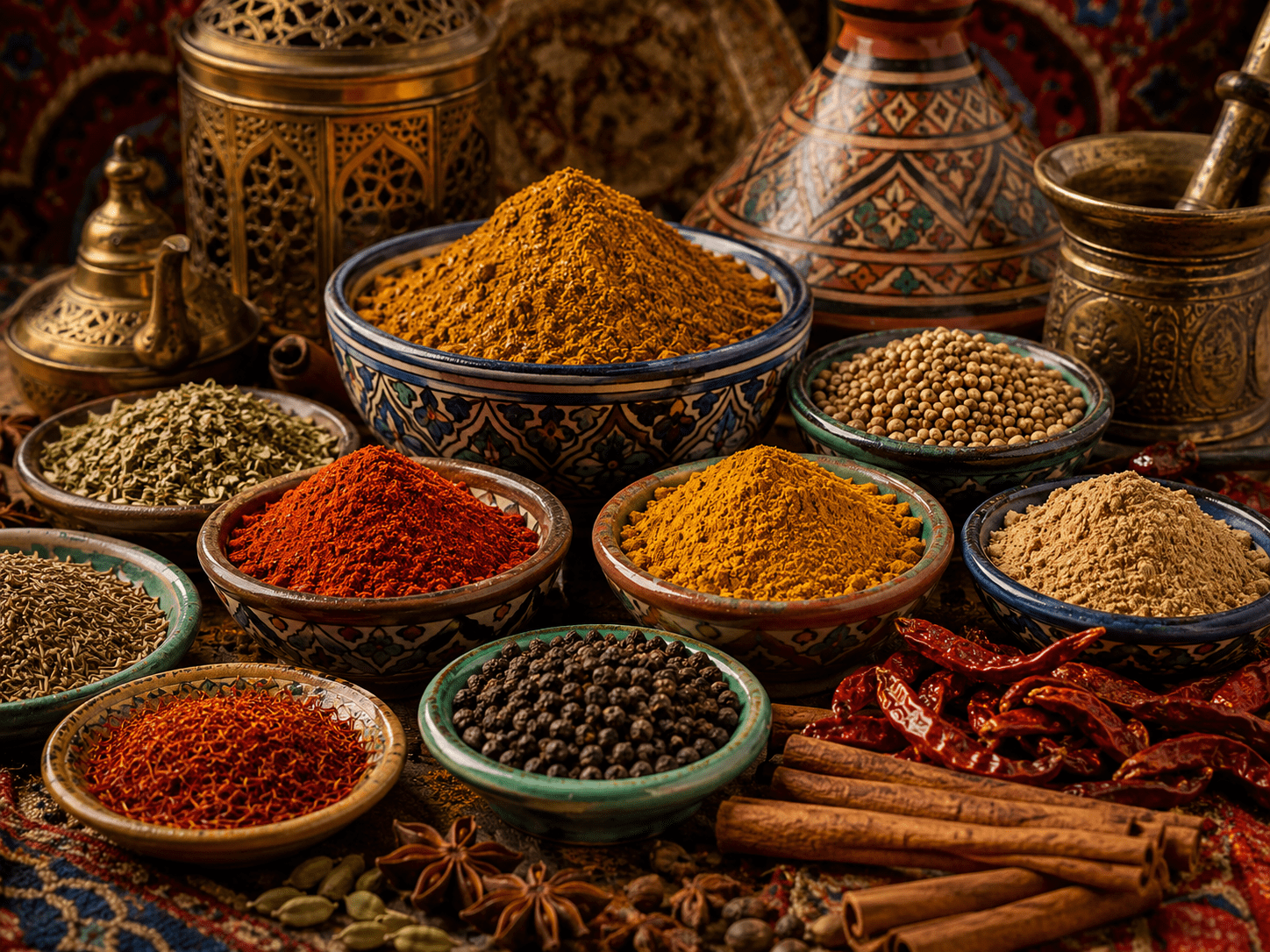
Cumin forms the earthy backbone of most Moroccan dishes, providing a warm, slightly bitter foundation that grounds other flavors. Look for whole cumin seeds when possible, toasting them lightly before grinding to release maximum aromatic compounds. Coriander seeds offer bright, citrusy notes that complement cumin’s earthiness, while ground cinnamon adds unexpected warmth to savory tagines and meat dishes. Ginger appears in both fresh and dried forms, with ground ginger providing more concentrated heat for spice blends. Turmeric contributes golden color and mild peppery flavor, particularly important in preserved lemon preparations and rice dishes. Paprika, specifically sweet Spanish paprika, adds vibrant red color and subtle smokiness without overwhelming heat. Black pepper provides sharp bite, while white pepper offers more subtle warmth for delicate fish preparations. Cardamom pods, both green and black varieties, contribute floral complexity to both sweet and savory applications throughout Moroccan cuisine.
Aromatic Whole Spices
Whole spices maintain their potency longer than pre-ground versions, making them essential for building authentic Moroccan spice blends. Cinnamon sticks infuse tagines and couscous with warm sweetness during long cooking processes. Whole cloves provide intense aromatic punch in small quantities, while allspice berries contribute complex flavor reminiscent of cinnamon, nutmeg, and cloves combined. Bay leaves, preferably Turkish varieties, add subtle herbal depth to meat stews and vegetable dishes. Nutmeg appears sparingly in meat preparations and sweet pastries, providing warm, slightly sweet complexity.
Traditional Moroccan Spice Blends
Ras el hanout represents Morocco’s most celebrated spice blend, translating to “top of the shop” and containing the spice merchant’s finest offerings. Traditional recipes include anywhere from 12 to 30 spices, with common ingredients being cumin, coriander, cinnamon, ginger, turmeric, paprika, cardamom, cloves, and sometimes rose petals or lavender. Each family and region maintains unique ratios, creating subtle variations that reflect local preferences and available ingredients. Baharat, while more common in Middle Eastern cooking, appears in northern Moroccan cuisine due to historical trade connections. This blend typically combines black pepper, allspice, cinnamon, cardamom, and nutmeg in specific proportions. Harissa, though technically a paste rather than a dry spice blend, deserves mention as it combines dried chilies with coriander, caraway, garlic, and salt to create Morocco’s primary heat source. Quality harissa balances warmth with aromatic complexity rather than focusing solely on heat level.
Specialty Ingredients That Complete the Moroccan Pantry
Saffron threads provide the golden color and distinctive floral aroma essential for special occasion dishes like chicken bastilla and festive couscous preparations. True saffron commands high prices due to labor-intensive harvesting, but small amounts create significant impact. Rose petals, typically from Damask roses, appear in both sweet and savory applications, adding delicate floral notes to tagines and pastries. Orange blossom water serves similar purposes, contributing citrusy floral essence to both cooking and baking. Preserved lemons, while not technically spices, amplify and complement spice flavors through their unique combination of saltiness, acidity, and concentrated citrus oils. These ingredients work alongside the core spice palette to create the distinctive flavor profile that defines authentic Moroccan cuisine. Nigella seeds, sometimes called black cumin, provide subtle onion-like flavor and appear scattered on breads and in vegetable dishes.
Frequently Asked Questions
What spices are essential for making authentic tagine?
Essential tagine spices include cumin, coriander, cinnamon, ginger, turmeric, and paprika as the foundation. Add saffron for special occasions and preserved lemons to enhance the spice flavors. Many recipes benefit from a quality ras el hanout blend that combines these elements with additional aromatic spices.
Can I substitute ground spices for whole spices in Moroccan recipes?
Ground spices work but provide less aromatic impact than whole spices toasted and ground fresh. If using pre-ground spices, reduce cooking time to prevent bitterness and add them later in the cooking process to preserve their flavor compounds.
How long do Moroccan spice blends stay fresh?
Properly stored whole spices maintain quality for 2-3 years, while ground spices and blends like ras el hanout stay potent for 12-18 months. Store in airtight containers away from light and heat to preserve aromatic compounds and prevent flavor degradation.
What makes ras el hanout different from other spice blends?
Ras el hanout combines sweet and savory spices in complex ratios that create layered flavor rather than single dominant notes. Unlike curry powder or garam masala, it includes rose petals or lavender in some versions, creating unique floral undertones specific to Moroccan cuisine.
Are Moroccan spices very hot and spicy?
Traditional Moroccan spice combinations emphasize warmth and aromatic complexity rather than heat. Most dishes derive their warmth from ginger, cinnamon, and black pepper rather than hot chilies. Harissa paste provides heat when desired but appears as a condiment rather than cooking ingredient.
Can I make my own ras el hanout blend at home?
Yes, basic ras el hanout combines equal parts cumin, coriander, cinnamon, and ginger with smaller amounts of turmeric, paprika, cardamom, and cloves. Start with these eight spices and adjust ratios according to your taste preferences before adding specialty ingredients like rose petals.
What dishes showcase Moroccan spices best for beginners?
Chicken tagine with preserved lemons demonstrates how Moroccan spices work together without requiring advanced techniques. Simple vegetable couscous seasoned with ras el hanout also highlights the warming spice combinations that define this cuisine while remaining approachable for new cooks.
Stock Your Kitchen with Authentic Moroccan Flavors
Building a comprehensive Moroccan spice collection opens endless possibilities for creating the warming, aromatic dishes that define this celebrated cuisine. These carefully balanced spice combinations have sustained Moroccan cooking traditions for centuries, creating layers of flavor that transform simple ingredients into memorable meals. Whether preparing weeknight tagines or special occasion couscous, having quality Moroccan spices on hand ensures authentic results that honor the sophisticated spice traditions of North African cooking. Start with the essential single spices and expand your collection as you explore different regional specialties and traditional preparations. Shop the Collection to discover premium Moroccan spices that bring authentic North African flavors to your kitchen.