Egyptian Dukkah Recipe: Aromatic Nut and Spice Blend Guide
Spread the love
dukkah recipe

Key Takeaways

Dukkah transforms simple ingredients into an aromatic Egyptian blend that elevates everything from olive oil dips to roasted vegetables, combining toasted nuts, seeds, and warm spices in endless variations.

  • Traditional dukkah combines hazelnuts, sesame seeds, coriander, and cumin in roughly equal proportions
  • Toasting each component separately maximizes flavor development and textural contrast
  • The blend should remain coarsely ground to preserve the satisfying crunch that defines authentic dukkah
  • Fresh dukkah keeps for up to three months when stored in airtight containers away from heat and light
  • Beyond the classic olive oil and bread pairing, dukkah enhances proteins, salads, and roasted vegetables

Understanding Egypt’s Ancient Spice Blend

Dukkah represents one of Egypt’s most enduring culinary contributions, a textured spice blend that predates modern seasoning trends by millennia. The name derives from the Arabic verb “to pound,” reflecting the traditional mortar and pestle preparation that creates dukkah’s signature coarse texture. Unlike smooth spice powders, authentic dukkah maintains distinct pieces of nuts and seeds that provide both flavor complexity and satisfying crunch.

According to food historians, dukkah originated in ancient Egypt where it served as both seasoning and sustenance for laborers and travelers. The blend’s combination of protein-rich nuts, mineral-dense seeds, and aromatic spices created a portable nutrition source that could withstand Egypt’s harsh climate. Today’s dukkah recipes maintain these foundational elements while allowing for regional and personal variations that reflect individual taste preferences and ingredient availability.

Essential Components and Their Roles

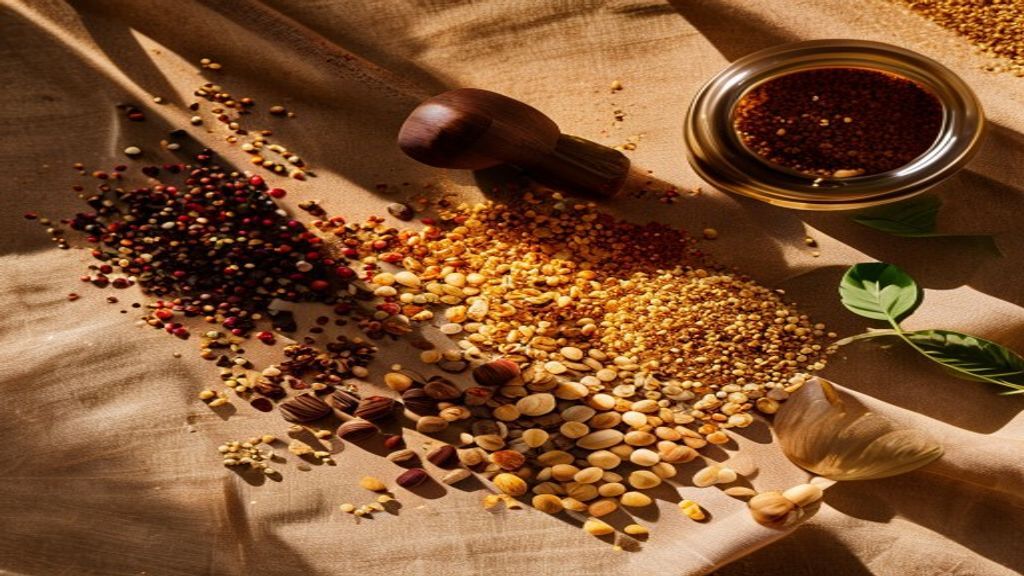
Traditional Egyptian dukkah relies on four primary components, each contributing distinct flavors and textures to the final blend. Hazelnuts provide rich, buttery notes and substantial crunch, while sesame seeds offer nutty depth and essential minerals. Coriander seeds contribute bright, citrusy aromatics that balance the blend’s earthiness, and cumin adds warm, slightly bitter undertones that ground the mixture’s flavor profile.

The proportions typically follow a 1:1:1:1 ratio, though many home cooks adjust based on personal preferences. Some recipes increase hazelnuts for richer texture, while others emphasize sesame seeds for more pronounced nuttiness. Research from Alexandria University’s Food Science Department indicates that toasting each component separately at different temperatures maximizes volatile compound development, creating more complex flavor layers than simultaneous toasting methods.

Selecting Quality Ingredients

Fresh, high-quality ingredients make the difference between mediocre and exceptional dukkah. Hazelnuts should feel heavy for their size with unblemished shells, while sesame seeds should appear plump and ivory-colored rather than yellowed or shriveled. Whole coriander seeds offer superior flavor compared to pre-ground versions, displaying pale brown color and releasing bright, lemony aromatics when crushed. Cumin seeds should appear uniform in size with deep brown coloration that indicates proper drying and storage.

Traditional Preparation Method

Creating authentic dukkah requires patience and attention to toasting times, as each ingredient reaches optimal flavor at different temperatures. Start by toasting hazelnuts in a dry skillet over medium heat for 8-10 minutes, shaking frequently until skins loosen and nuts develop golden color. Remove skins by rubbing toasted hazelnuts in a clean kitchen towel, then set aside to cool completely.

Toast sesame seeds in the same dry skillet over medium-low heat for 3-4 minutes until fragrant and lightly golden. Transfer to a separate bowl and toast coriander seeds for 2-3 minutes until aromatic. Finally, toast cumin seeds for 1-2 minutes until fragrant but not darkened. Allow all components to cool to room temperature before grinding to prevent oil release that creates paste-like consistency rather than the desired coarse texture.

Combine cooled ingredients in a food processor or mortar and pestle, pulsing or pounding briefly to create a coarse mixture with visible nut and seed pieces. The texture should resemble coarse breadcrumbs rather than fine powder, maintaining the characteristic crunch that defines authentic dukkah.

Modern Variations and Applications

Contemporary dukkah recipes often incorporate almonds, pistachios, or pine nuts alongside traditional hazelnuts, creating unique flavor profiles that reflect regional preferences. Middle Eastern variations might include za’atar or sumac for tangy complexity, while North African versions sometimes feature fennel seeds or dried mint. These adaptations respect dukkah’s foundational principles while expanding its culinary applications.

Beyond the classic serving method with olive oil and warm bread, dukkah enhances grilled meats, roasted vegetables, and fresh salads. Sprinkle over hummus or labneh for added texture, use as a crust for baked fish, or incorporate into yogurt marinades for chicken. The blend’s versatility makes it equally at home on elegant cheese boards and weeknight dinner tables.

Storage plays a crucial role in maintaining dukkah’s quality and preventing rancidity in the oil-rich nuts and seeds. Store in airtight glass containers away from direct sunlight and heat sources. Properly stored dukkah maintains peak flavor for up to three months, though most batches disappear much sooner once family members discover its addictive combination of crunch, aroma, and complex flavor.

Frequently Asked Questions

Can I make dukkah without hazelnuts?

Yes, almonds, pistachios, or walnuts work well as hazelnut substitutes. Toast them using the same method, adjusting time based on nut size and oil content. Each nut variety creates distinct flavor profiles while maintaining dukkah’s essential texture.

How coarse should I grind the dukkah mixture?

Aim for a texture resembling coarse breadcrumbs with visible nut and seed pieces. Over-grinding releases oils and creates paste-like consistency that loses the characteristic crunch. Pulse food processors briefly or use controlled mortar and pestle motions.

What causes dukkah to become bitter?

Over-toasting seeds and spices, particularly cumin and coriander, creates bitter compounds. Toast each component separately and watch for color changes and aromatic cues rather than relying solely on timing. Properly toasted ingredients should smell fragrant, not harsh.

How do I prevent dukkah from becoming oily?

Allow all toasted components to cool completely before grinding. Heat releases oils from nuts and seeds, creating paste rather than the desired coarse texture. Cool ingredients maintain their structure during grinding.

Can I toast ingredients in the oven instead of stovetop?

Oven toasting works well for larger batches. Spread each ingredient on separate baking sheets and toast at 350°F, checking frequently. Hazelnuts need 10-12 minutes, while seeds require 3-5 minutes depending on size.

What’s the best way to serve dukkah traditionally?

Serve with high-quality olive oil for dipping warm bread or vegetables. Create shallow pools of olive oil on individual plates, then sprinkle dukkah generously over the surface. The oil carries the blend’s aromatics while the bread provides textural contrast.

Discover Your Perfect Dukkah Blend Today

Creating exceptional dukkah starts with premium ingredients that showcase Egypt’s ancient spice traditions in your modern kitchen. The interplay between toasted nuts, aromatic seeds, and warming spices creates a blend that transforms simple meals into memorable dining experiences. Whether you follow traditional recipes or experiment with contemporary variations, dukkah offers endless opportunities to explore Middle Eastern flavors and textures. Let your creativity guide your spice selections and discover the combinations that best suit your palate and cooking style. Shop the Collection to find the finest coriander seeds, cumin, sesame seeds, and specialty nuts that will elevate your homemade dukkah to restaurant-quality standards.

Leave a Reply

Your email address will not be published. Required fields are marked *

Fill out this field
Fill out this field
Please enter a valid email address.

Related Articles

Spread the love
dukkah recipe

Key Takeaways

Dukkah transforms simple ingredients into an aromatic Egyptian blend that elevates everything from olive oil dips to roasted vegetables, combining toasted nuts, seeds, and warm spices in endless variations.

  • Traditional dukkah combines hazelnuts, sesame seeds, coriander, and cumin in roughly equal proportions
  • Toasting each component separately maximizes flavor development and textural contrast
  • The blend should remain coarsely ground to preserve the satisfying crunch that defines authentic dukkah
  • Fresh dukkah keeps for up to three months when stored in airtight containers away from heat and light
  • Beyond the classic olive oil and bread pairing, dukkah enhances proteins, salads, and roasted vegetables

Understanding Egypt’s Ancient Spice Blend

Dukkah represents one of Egypt’s most enduring culinary contributions, a textured spice blend that predates modern seasoning trends by millennia. The name derives from the Arabic verb “to pound,” reflecting the traditional mortar and pestle preparation that creates dukkah’s signature coarse texture. Unlike smooth spice powders, authentic dukkah maintains distinct pieces of nuts and seeds that provide both flavor complexity and satisfying crunch.

According to food historians, dukkah originated in ancient Egypt where it served as both seasoning and sustenance for laborers and travelers. The blend’s combination of protein-rich nuts, mineral-dense seeds, and aromatic spices created a portable nutrition source that could withstand Egypt’s harsh climate. Today’s dukkah recipes maintain these foundational elements while allowing for regional and personal variations that reflect individual taste preferences and ingredient availability.

Essential Components and Their Roles

Traditional Egyptian dukkah relies on four primary components, each contributing distinct flavors and textures to the final blend. Hazelnuts provide rich, buttery notes and substantial crunch, while sesame seeds offer nutty depth and essential minerals. Coriander seeds contribute bright, citrusy aromatics that balance the blend’s earthiness, and cumin adds warm, slightly bitter undertones that ground the mixture’s flavor profile.

The proportions typically follow a 1:1:1:1 ratio, though many home cooks adjust based on personal preferences. Some recipes increase hazelnuts for richer texture, while others emphasize sesame seeds for more pronounced nuttiness. Research from Alexandria University’s Food Science Department indicates that toasting each component separately at different temperatures maximizes volatile compound development, creating more complex flavor layers than simultaneous toasting methods.

Selecting Quality Ingredients

Fresh, high-quality ingredients make the difference between mediocre and exceptional dukkah. Hazelnuts should feel heavy for their size with unblemished shells, while sesame seeds should appear plump and ivory-colored rather than yellowed or shriveled. Whole coriander seeds offer superior flavor compared to pre-ground versions, displaying pale brown color and releasing bright, lemony aromatics when crushed. Cumin seeds should appear uniform in size with deep brown coloration that indicates proper drying and storage.

Traditional Preparation Method

Creating authentic dukkah requires patience and attention to toasting times, as each ingredient reaches optimal flavor at different temperatures. Start by toasting hazelnuts in a dry skillet over medium heat for 8-10 minutes, shaking frequently until skins loosen and nuts develop golden color. Remove skins by rubbing toasted hazelnuts in a clean kitchen towel, then set aside to cool completely.

Toast sesame seeds in the same dry skillet over medium-low heat for 3-4 minutes until fragrant and lightly golden. Transfer to a separate bowl and toast coriander seeds for 2-3 minutes until aromatic. Finally, toast cumin seeds for 1-2 minutes until fragrant but not darkened. Allow all components to cool to room temperature before grinding to prevent oil release that creates paste-like consistency rather than the desired coarse texture.

Combine cooled ingredients in a food processor or mortar and pestle, pulsing or pounding briefly to create a coarse mixture with visible nut and seed pieces. The texture should resemble coarse breadcrumbs rather than fine powder, maintaining the characteristic crunch that defines authentic dukkah.

Modern Variations and Applications

Contemporary dukkah recipes often incorporate almonds, pistachios, or pine nuts alongside traditional hazelnuts, creating unique flavor profiles that reflect regional preferences. Middle Eastern variations might include za’atar or sumac for tangy complexity, while North African versions sometimes feature fennel seeds or dried mint. These adaptations respect dukkah’s foundational principles while expanding its culinary applications.

Beyond the classic serving method with olive oil and warm bread, dukkah enhances grilled meats, roasted vegetables, and fresh salads. Sprinkle over hummus or labneh for added texture, use as a crust for baked fish, or incorporate into yogurt marinades for chicken. The blend’s versatility makes it equally at home on elegant cheese boards and weeknight dinner tables.

Storage plays a crucial role in maintaining dukkah’s quality and preventing rancidity in the oil-rich nuts and seeds. Store in airtight glass containers away from direct sunlight and heat sources. Properly stored dukkah maintains peak flavor for up to three months, though most batches disappear much sooner once family members discover its addictive combination of crunch, aroma, and complex flavor.

Frequently Asked Questions

Can I make dukkah without hazelnuts?

Yes, almonds, pistachios, or walnuts work well as hazelnut substitutes. Toast them using the same method, adjusting time based on nut size and oil content. Each nut variety creates distinct flavor profiles while maintaining dukkah’s essential texture.

How coarse should I grind the dukkah mixture?

Aim for a texture resembling coarse breadcrumbs with visible nut and seed pieces. Over-grinding releases oils and creates paste-like consistency that loses the characteristic crunch. Pulse food processors briefly or use controlled mortar and pestle motions.

What causes dukkah to become bitter?

Over-toasting seeds and spices, particularly cumin and coriander, creates bitter compounds. Toast each component separately and watch for color changes and aromatic cues rather than relying solely on timing. Properly toasted ingredients should smell fragrant, not harsh.

How do I prevent dukkah from becoming oily?

Allow all toasted components to cool completely before grinding. Heat releases oils from nuts and seeds, creating paste rather than the desired coarse texture. Cool ingredients maintain their structure during grinding.

Can I toast ingredients in the oven instead of stovetop?

Oven toasting works well for larger batches. Spread each ingredient on separate baking sheets and toast at 350°F, checking frequently. Hazelnuts need 10-12 minutes, while seeds require 3-5 minutes depending on size.

What’s the best way to serve dukkah traditionally?

Serve with high-quality olive oil for dipping warm bread or vegetables. Create shallow pools of olive oil on individual plates, then sprinkle dukkah generously over the surface. The oil carries the blend’s aromatics while the bread provides textural contrast.

Discover Your Perfect Dukkah Blend Today

Creating exceptional dukkah starts with premium ingredients that showcase Egypt’s ancient spice traditions in your modern kitchen. The interplay between toasted nuts, aromatic seeds, and warming spices creates a blend that transforms simple meals into memorable dining experiences. Whether you follow traditional recipes or experiment with contemporary variations, dukkah offers endless opportunities to explore Middle Eastern flavors and textures. Let your creativity guide your spice selections and discover the combinations that best suit your palate and cooking style. Shop the Collection to find the finest coriander seeds, cumin, sesame seeds, and specialty nuts that will elevate your homemade dukkah to restaurant-quality standards.

Previous Post
Authentic Jerk Seasoning Recipe with Traditional Jamaican Spices

Leave a Reply

Your email address will not be published. Required fields are marked *

Fill out this field
Fill out this field
Please enter a valid email address.

Related Articles