
Spices for Indian Sweets: The Complete Guide
Learn which spices are used in Indian sweets cardamom, saffron, nutmeg, rose water, kewra, and more. Complete guide to mithai aromatics by sweet type, region, and storage. Spice Station Silver Lake.
Last Updated: April 2026
The spices used in Indian sweets are green cardamom, saffron, nutmeg, clove, rose water, kewra, and black cardamom. These seven aromatics define the flavor of mithai the broad category of Indian confections that includes kheer, ladoo, halwa, barfi, gulab jamun, and dozens of other classics. Without them, Indian sweets are just sugar and milk. With them, they become something unmistakable.
India produces roughly 75% of the world’s cardamom supply and consumes the majority of it domestically (FAO, 2023), which tells you something about how central spiced sweetness is to Indian culinary identity. This guide covers every key sweet spice, how each one behaves in the kitchen, and which Indian desserts rely on it most.
Why Spices Are the Soul of Indian Sweets
Indian sweets were never just about sugar. The earliest mithai a word derived from the Sanskrit mitha, meaning sweet were formulated with digestive and medicinal goals alongside flavor. According to the Oxford Companion to Food, Ayurvedic texts from as far back as the 6th century BCE describe cardamom, saffron, and fennel as essential to post-meal preparations designed to support digestion and calm the body.
The result was a sweet-making tradition fundamentally different from Western confectionery. Where a French pastry leads with butter and technique, Indian sweets lead with fragrance. A besan ladoo without cardamom is technically correct but spiritually empty. Saffron in kheer isn’t decoration it’s architecture.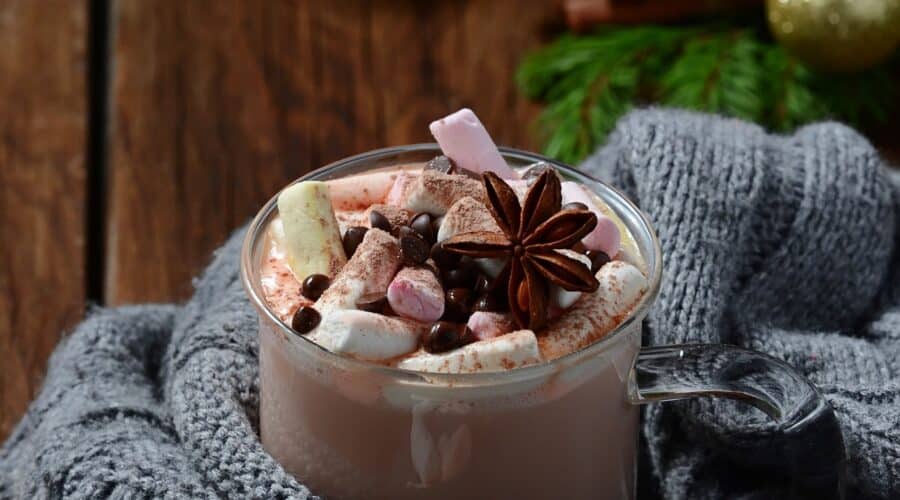
This is why understanding the role of each spice matters before you reach for the pot. Each one contributes something specific: green cardamom brings citrusy florality, saffron adds golden warmth and bitterness, nutmeg deepens creaminess, clove sharpens, rose water softens, kewra brightens, and black cardamom adds smoke in certain savory-adjacent sweets.
Browse Spice Station’s full Indian spice collection to see how many of these aromatics are available as individual ingredients.
The 7 Essential Spices for Indian Sweets
1. Green Cardamom: The Backbone of Mithai
Green cardamom (Elettaria cardamomum) is the single most important spice in Indian sweets. Native to the Western Ghats of Southern India, it carries a flavor profile that sits somewhere between eucalyptus, lemon peel, and rose simultaneously cool and warm, bright and floral.
In Indian dessert-making, green cardamom does the work that vanilla does in Western baking: it’s the thread everything else is organized around. Besan ladoo, gajar halwa, kheer, barfi, and shrikhand all rely on it as their base aromatic. According to research published in the Journal of Agricultural and Food Chemistry (2020), the primary volatile compound in green cardamom 1,8-cineole begins releasing at temperatures above 40°C, which is why adding ground cardamom to warm milk or ghee produces an immediate bloom of fragrance.
The standard ratio in most mithai recipes is ½ teaspoon of ground cardamom per cup of milk or per 250g of sweets. It’s subtle enough that you can always add more, but very difficult to correct if you over-add. Learn more in our guide to cardamom in Indian sweets.
2. Saffron: Color, Bitterness, and Warmth
Saffron (Crocus sativus) is the world’s most expensive spice by weight approximately $5,000 per kilogram for premium Kashmiri threads (Saffron Market Report, 2024) and in Indian sweets it earns every cent. The threads contain picrocrocin (responsible for bitterness), safranal (responsible for the honey-like fragrance), and crocin (responsible for the vivid golden color).
In kheer, phirni, and shrikhand, saffron contributes all three simultaneously. The trick is blooming: steep 8 to 10 threads in 2 tablespoons of warm (not boiling) milk for at least 10 minutes before adding to your recipe. This dissolves the crocin and activates the safranal. Skipping this step means adding saffron that won’t fully express itself until after your sweet has been served, which is a waste of an expensive ingredient.
Our existing guide on why saffron is special covers its broader history, but its role in Indian sweets specifically is explored in depth in our saffron in Indian desserts guide.
3. Nutmeg: Deepening Creaminess
Nutmeg (Myristica fragrans) doesn’t announce itself the way cardamom does, but remove it from a well-made shrikhand or rice kheer and you’ll notice its absence immediately. It provides a warm, slightly peppery earthiness that makes creamy desserts feel more substantial.
The compound myristicin is responsible for nutmeg’s distinctive warm quality, and it intensifies with fat which is why a pinch into cream, rabri, or ghee-based sweets like suji halwa works so well. Always grate nutmeg fresh if possible; pre-ground nutmeg loses its essential oils rapidly after processing. A standard addition is roughly ¼ teaspoon per 500ml of milk base.
Read our full explainer on what is nutmeg for cultivation and sourcing context.
4. Clove: The Sharp Note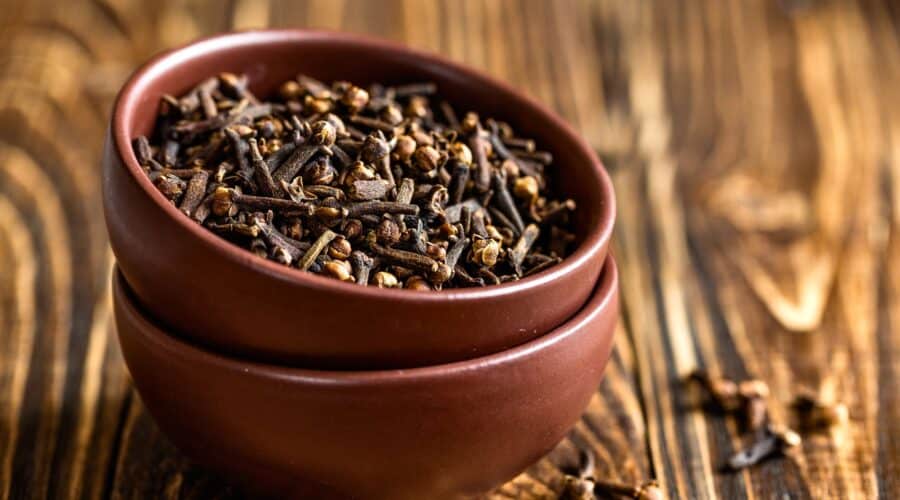
Whole cloves rarely appear in sweet mithai directly, but clove is a component of many Indian sweet spice blends, and its presence (usually 1 to 2 whole cloves steeped and removed, or a tiny pinch of ground clove) adds a sharp, aromatic intensity that prevents rich sweets from becoming cloying.
Think of clove as punctuation. A slow-cooked kheer or a dense barfi has a tendency to flatten at the back of the palate. A whisper of clove prevents that. It appears most often in the aromatic blends used for sevaiyan (vermicelli kheer) and in the whole-spice bouquets steeped into milk for payasam.
Because clove is easy to over-apply, it’s worth exploring how to keep spices fresh stale clove loses its edge and can contribute only bitterness, not fragrance.
5. Rose Water and Kewra: The Floral Agents
Rose water and kewra (pandanus water) are not technically spices they’re hydrosols, the water-soluble extract of petals but they function as flavorings in exactly the way spices do and belong in any complete discussion of Indian sweet aromatics.
Rose water is steam-distilled from Rosa damascena petals and contributes a soft, slightly sweet floral note that defines gulab jamun and some barfi varieties. Kewra, distilled from pandanus flowers, is more intensely floral and slightly vegetal it’s the dominant flavor in many South Asian sweets and is particularly associated with Eid and festive preparations. The two are not interchangeable; rose water is rounder, kewra is sharper and more tropical.
Both are explored in depth in our guide to rose water and kewra in Indian sweets.
6. Black Cardamom: The Smoky Edge
Black cardamom (Amomum subulatum) is the lesser-discussed cousin of green cardamom, and its role in Indian sweets is more specialized. Primarily a savory spice it appears in biryani, dal makhani, and slow-cooked meat dishes black cardamom occasionally appears in South Indian and some Mughal-influenced sweets where a smoky depth is wanted.
It shows up in certain chikki (nut brittle) recipes and in some payasam preparations from Tamil Nadu, where the smokiness contrasts with the coconut base. It’s never a substitute for green cardamom; they’re different tools with different effects. Our B’s Biryani blend gives you a sense of how black cardamom performs in a full spice context.
7. Fennel Seed: The Gentle Sweetener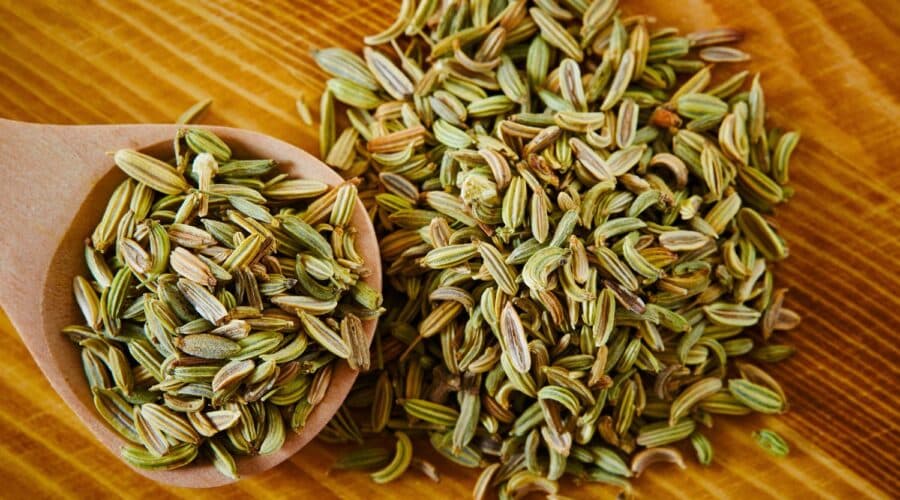
Fennel seed (Foeniculum vulgare) is underused in Western kitchens but essential in Indian sweet-making, particularly in the digestive blend called meetha masala and in mukhwas. Its anise-like sweetness is mild and cooling the opposite of clove’s sharpness and it appears in halwa, in some ladoo varieties, and as the base of post-meal mouth fresheners. Read more about its role in our guide to meetha masala.
Spices by Sweet Type
Kheer and Milk-Based Puddings
Primary spices: Green cardamom (½ tsp ground per liter of milk), saffron (10 threads, bloomed), nutmeg (¼ tsp grated)
Kheer is the most forgiving canvas for Indian sweet spices. It’s cooked slowly over low heat, which gives each aromatic time to express itself fully. The milk fat carries the fat-soluble volatile compounds in cardamom and nutmeg beautifully. Saffron should always be added after the milk has thickened adding it too early can dull both its color and fragrance.
Ladoo
Primary spices: Green cardamom (¾ tsp ground per 250g chickpea flour), nutmeg (optional, ⅛ tsp)
Besan ladoo is almost exclusively about green cardamom. The spice is added to the toasted chickpea flour while it’s still warm, allowing the heat to help distribute the cardamom’s volatile compounds throughout the mixture. Some North Indian variations add a whisper of black pepper to cut the richness of the ghee.
Halwa
Primary spices: Green cardamom, saffron, nutmeg
Gajar halwa (carrot halwa) is the most widely made Indian sweet at home, and its spice profile is forgiving. Cardamom is essential; saffron is traditional in richer preparations; nutmeg is optional but adds warmth. See our full recipe guide to gajar halwa spices.
Barfi and Fudge-Style Sweets
Primary spices: Green cardamom, rose water, kewra (occasionally saffron)
Barfi — a dense milk-solid sweet that takes dozens of forms is where rose water and kewra shine brightest. The sweet is set rather than cooked through extensive heating, so floral hydrosols added at the end retain maximum impact.
Gulab Jamun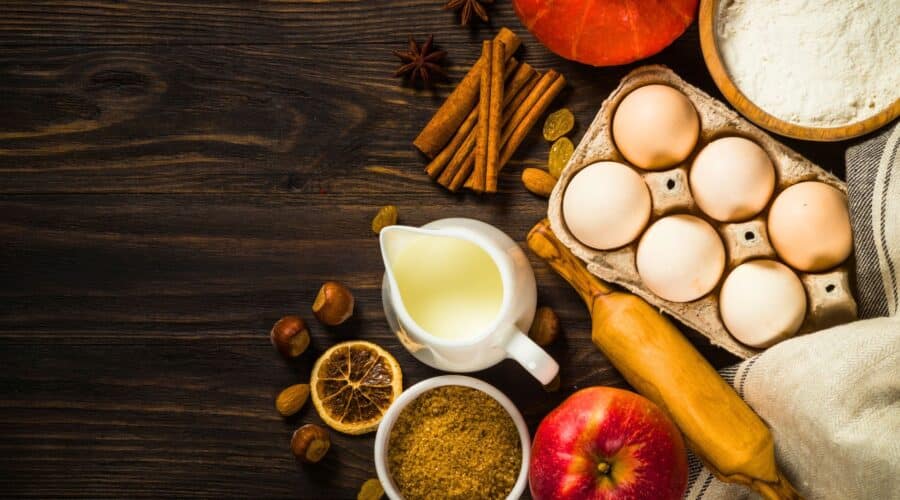
Primary spices: Green cardamom, rose water
The syrup in which gulab jamun soaks is the vehicle for almost all of the flavor. A classic syrup uses cardamom pods (bruised, not ground), a few tablespoons of rose water added off-heat, and occasionally a few saffron threads.
Regional Traditions: How Spice Use Shifts Across India
The same sweet can taste radically different depending on which part of India made it, largely because of regional spice preferences.
North India the heartland of mithai culture leans heavily on cardamom, saffron, and rose water. Mughal culinary influence brought a love of floral aromatics and expensive ingredients like saffron and pistachios to sweets like shahi tukda, phirni, and rabri.
South India uses cardamom too, but shifts toward coconut milk as the base and incorporates jaggery instead of white sugar. This gives South Indian sweets like payasam, modak, and chikki a deeper, more caramelized character. Explore this further in our guide to jaggery and spices in South Indian sweets.
East India (Bengal) is the home of chhena-based sweets sandesh, rasgulla, and mishti doi that use rose water as their primary aromatic. The milk proteins are the focus here, and spicing is intentionally light so that the delicate texture isn’t overwhelmed.
West India (Gujarat and Rajasthan) brings saffron and dry fruits into almost everything. Gujarati mohanthal (a besan-based fudge) and Rajasthani ghewar (a honeycomb sweet) both use saffron as a defining ingredient.
Read our full breakdown of regional Indian sweet spice traditions for a deeper tour.
How to Buy and Store Indian Sweet Spices
The quality gap between fresh and stale spices is nowhere more apparent than in Indian sweets. Because the dishes often use minimal spice quantities a few pinches, half a teaspoon the spice has to carry significant weight. A pinch of vibrant, freshly sourced cardamom can define a dish. A pinch of powdered cardamom that has been sitting in a warm spice cabinet for 18 months will barely register.
Buying guidelines: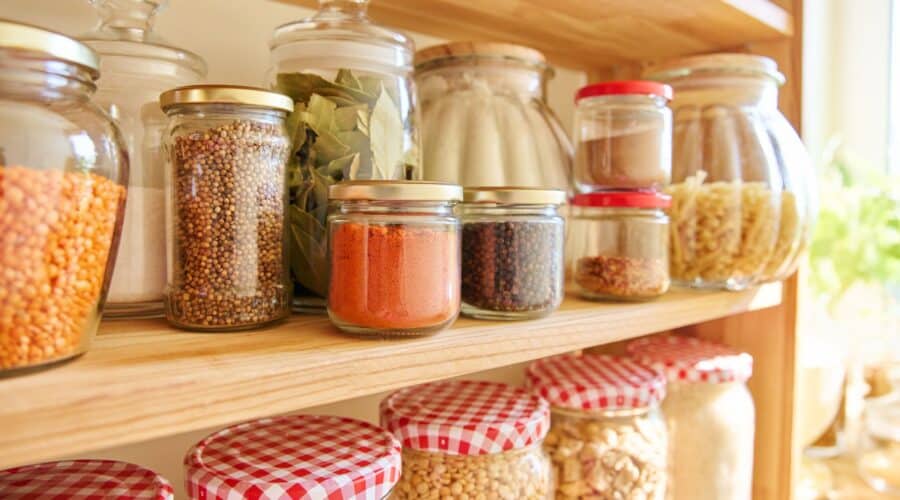
- Green cardamom: Buy whole pods and grind them yourself when possible. The pods should be bright green, not pale or yellowish. Powder oxidizes quickly; whole pods stay fragrant for up to 18 months in an airtight container.
- Saffron: Look for deep red threads with orange tips. Avoid saffron that looks uniformly orange or faded it may be dyed safflower. Kashmiri and Spanish saffron are both excellent; Iranian is widely available and performs well in cooking.
- Nutmeg: Whole nutmegs grated to order far outperform pre-ground nutmeg. A whole nutmeg keeps for years; ground nutmeg loses its character within a few months.
For complete storage guidance, see our guide on how to keep spices fresh.
Explore Spice Station’s full spices collection and spice blends for individually sourced aromatics suited to Indian sweet-making.
Pairing Indian Sweets with Masala Chai
No conversation about Indian sweets is complete without masala chai. The spice mix in a traditional chai cardamom, ginger, cinnamon, cloves, black pepper echoes the same aromatic vocabulary as Indian sweets, which is why the two work together so naturally. A cardamom-heavy kheer pairs with a ginger-forward chai; rose-scented barfi pairs with a lightly spiced, milky preparation. Learn the pairings in depth in our masala chai and Indian sweet pairings guide, and read the full history of chai in our introduction to masala chai.
If you want to experience what well-sourced Indian aromatics taste like in combination before committing to a recipe, Spice Station’s golden milk blend a turmeric, cardamom, cinnamon, and ginger blend is a fast way to see how these flavors interact.
Frequently Asked Questions
What spices are used in Indian sweets?
The core spices in Indian sweets are green cardamom, saffron, nutmeg, clove, rose water, kewra, and fennel. Green cardamom is the most widely used across all regional traditions. Saffron appears in milk-based desserts like kheer and shrikhand. Nutmeg deepens creaminess. Clove, rose water, and kewra are used selectively depending on the type of sweet and regional tradition.
Is cardamom used in Indian desserts?
Yes — green cardamom is the foundational sweet spice in Indian desserts. It appears in virtually every category of mithai, from ladoo and halwa to barfi and kheer. A typical recipe uses ½ to ¾ teaspoon of freshly ground green cardamom per serving for four people.
What is the main spice in gulab jamun?
The syrup surrounding gulab jamun is flavored primarily with green cardamom pods and rose water. Some recipes also include saffron threads steeped directly in the warm syrup. The dough itself is typically unflavored, so the soaking syrup carries the entire aromatic character of the dessert.
What makes kheer fragrant?
Kheer gets its fragrance from the combination of green cardamom and saffron. The cardamom blooms into the hot milk during cooking, while saffron should be pre-bloomed in warm milk separately and added during the final few minutes of cooking to preserve its fragrance. A light grating of fresh nutmeg just before serving adds a warm top note.
What are traditional Indian Diwali sweets and their spices?
Traditional Diwali sweets include besan ladoo (green cardamom), kaju katli (cardamom, optional rose water), gajar halwa (cardamom, nutmeg, saffron), barfi in various forms (cardamom, rose water), and jalebi (cardamom in the syrup). Nearly every Diwali sweet is cardamom-forward, with saffron as the prestige addition for special-occasion preparations.
What is garam masala’s role in Indian sweets?
Garam masala is primarily a savory spice blend, but some of its components cardamom, cinnamon, nutmeg appear in sweet preparations independently. The full garam masala blend is not typically used in mithai, but understanding its composition helps you see which Indian spices cross the sweet-savory boundary.
How do I store Indian sweet spices for the longest shelf life?
Store whole spices in airtight glass containers away from heat, light, and moisture. Whole green cardamom pods: up to 18 months. Saffron threads in a sealed tin: 2 to 3 years. Whole nutmeg: up to 4 years. Ground spices lose potency much faster roughly 6 months for cardamom powder, 1 year for ground nutmeg. See our spice freshness guide for complete storage advice.
Explore Indian Spices at Spice Station
Spice Station carries individually sourced aromatics for every category of Indian sweet-making. Browse the Indian cuisine collection for green cardamom, saffron, nutmeg, fennel, and curated blends designed for Indian cooking. For questions about sourcing, spice pairings, or wholesale orders, visit our contact page.