
Urfa Biber: The Complete Guide to Turkey’s Dark, Smoky Chile Pepper
Urfa biber (isot pepper) is a smoky, raisin-flavored Turkish chile with 5,000–8,000 SHU heat. Learn how it’s made, how to use it, substitutes, storage tips, and where to buy authentic urfa biber online.

Urfa biber (pronounced OOR-fah bee-BARE) is a dried Turkish chile pepper known for its deep burgundy-to-black color, smoky raisin-like flavor, and slow-building heat of roughly 5,000 to 8,000 Scoville Heat Units. Also called isot pepper or isot biber, it comes from the Şanlıurfa province of southeastern Turkey, where a traditional nighttime sweating process turns ordinary red peppers into something entirely different. If you’ve been reaching for the same crushed red pepper flakes for years, urfa biber is the upgrade you didn’t know you needed.
Urfa biber has been picking up serious momentum. The US seasonings and spices market reached $2.94 billion in 2025 and is projected to hit $4.02 billion by 2030, according to Mordor Intelligence, with ethnic cuisine adoption growing at 29% and heat-forward flavors rising 17% in recent tracking. Urfa biber sits right at that intersection: a single-origin, artisanal Turkish pepper with a flavor profile that works in everything from grilled lamb kebabs to chocolate brownies. Spice expert Lior Lev Sercarz of La Boîte in New York puts it on his short list of “everything spices,” meaning it goes on literally anything, whether raw or cooked, sweet or savory.
Where Urfa Biber Comes From
Urfa biber is a Capsicum annuum variety grown almost exclusively in the Şanlıurfa province of southeastern Turkey, near the Syrian border. The region’s extreme climate, with summer temperatures reaching 40 to 50°C, mineral-rich Euphrates basin soils, and low humidity, creates conditions that no other growing area replicates. Turkey is the world’s third- or fourth-largest pepper producer, harvesting approximately 3 million metric tons annually according to 2022 FAOSTAT data, accounting for 8.16% of global production.
The name “isot” comes from Ottoman Turkish ısı ot, meaning “hot weed,” documented as far back as the late 15th century. Chile peppers themselves arrived in the Ottoman Empire during the early 1500s through Portuguese and Spanish trade routes. By the time Şanlıurfa’s farmers began perfecting their drying and sweating technique, the pepper had earned protected geographical indication (GI) status from the Turkish government in 2002, officially registered as “Şanlıurfa Biberi.” That GI status means only peppers grown and processed in the designated Şanlıurfa region can legally carry the name.
Urfa biber’s international rise accelerated during the 2010s, largely because of the Syrian civil war. Aleppo pepper exports dropped from over 10,000 metric tons pre-2011 to under 1,200 by 2012 according to FAO data, and chefs worldwide began searching for alternatives. Urfa biber filled that gap, and publications like Food & Wine, Bon Appétit, and Saveur took notice. Today, the pepper appears on menus from Yotam Ottolenghi’s London restaurants to J. Kenji López-Alt’s recipe archives, and it’s become a staple in the pantries of curious home cooks who want something more interesting than standard crushed red pepper flakes.
How Urfa Biber Is Made: The Sweating Process
What separates urfa biber from every other dried chile is a traditional post-harvest technique called sweating, or isot yapma. Understanding this process explains the pepper’s color, flavor, and texture.
Farmers harvest the peppers between August and October when they’ve ripened to a deep maroon-red. After stemming, deseeding, and slicing into two or three pieces, the peppers are spread on flat rooftops or drying racks and sun-dried for roughly one week. This is where the process diverges from standard dried peppers like Aleppo pepper or ancho chile.
During the sweating phase, the partially dried peppers are sealed tightly in bags or containers, left in the sun during the day, then covered with cloths at night to trap warmth and moisture. This cycle continues for several days. The sealed, warm environment triggers a mild lactic acid fermentation that transforms the color from red to deep burgundy or purple-black. This same process develops concentrated natural sugars,
complex tannins, and the characteristic smoky flavor compounds. A small amount of salt and sometimes olive oil is added when the dried peppers are finally crushed into flakes.
The critical point: urfa biber is not smoked. Despite what many recipe headnotes claim, the smokiness comes entirely from fermentation, not wood or fire. As Ethan Frisch of Burlap & Barrel told the Washington Post: Aleppo and urfa chile are actually the same pepper plant. They differ in processing, not variety. Urfa biber is “cured rather than dried,” which is what gives it that entirely different character.
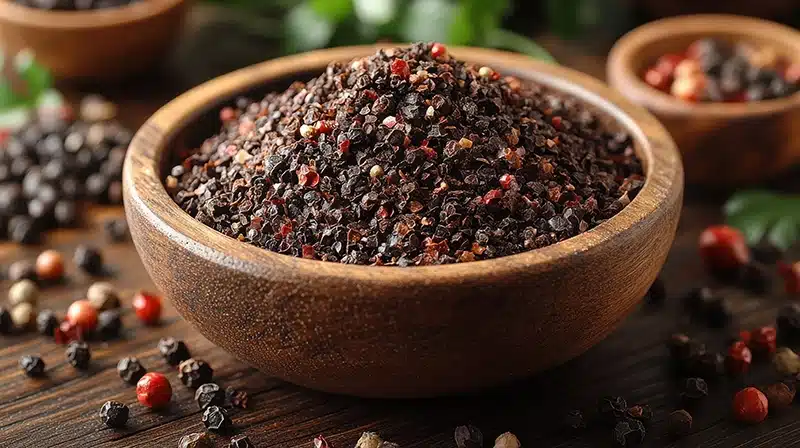
There’s also an industrial method worth knowing about. Some large producers use oven-drying followed by friction-heating at 60 to 65°C, then knead the peppers in wooden containers at 80 to 90°C for 30 to 36 hours. This shortcut produces a browner color with fewer carotenoids and less flavor complexity compared to the traditional sun-and-night method. When you buy urfa biber, the color is your best clue: traditional product is deep burgundy-to-black with a slightly oily sheen; industrial product tends toward a flat brown.
What Urfa Biber Tastes Like
Urfa biber’s flavor is unlike any other dried chile in your spice cabinet. Food writers and chefs consistently reach for the same descriptors: smoky, raisin-like, with notes of dark chocolate, coffee, dried fruit, tobacco, and wine-like tannins. One memorable description from Bellisari’s captures it well: imagine what would happen if a chile pepper and a raisin had a baby. CNN featured Lior Lev Sercarz’s recommendation of urfa biber as an alternative to standard crushed red pepper, highlighting its light smokiness, great depth, and fruit-forward character.
The heat experience is just as distinctive. Rather than the sharp, front-of-mouth burn you get from cayenne or bird’s eye chiles, urfa biber’s heat builds slowly at the back of the palate and lingers. You’ll notice warmth 10 to 15 seconds after the first bite, and it stays with you. That delayed, gentle burn is why the pepper works so well as a finishing spice, sprinkled on just before serving rather than cooked into a dish for hours.
Urfa Biber Scoville Rating: How Hot Is It, Really?
If you search for urfa biber’s Scoville rating, you’ll find wildly conflicting numbers. Wikipedia cites 7,500 SHU from The Spice House. PepperScale reports 30,000 to 50,000 SHU. MasterClass claims 50,000 to 80,000 SHU. Some Alibaba articles put it as low as 500 to 2,000 SHU. This confusion has a straightforward explanation.
Fresh urfa peppers on the plant likely measure 30,000 to 50,000 SHU, consistent with other medium-hot Capsicum annuum varieties. But the sweating process, combined with deseeding and the addition of salt and oil, significantly changes the heat profile of the finished product. The dried, processed flakes you actually buy and cook with register approximately 5,000 to 8,000 SHU. For practical comparison, that’s roughly on par with a jalapeño and about one-third to one-half the heat of Aleppo pepper’s measured Scoville rating at approximately 10,000 SHU. It’s enough warmth to register in every bite without overwhelming anything else on the plate.
Laboratory Scoville testing itself introduces variation. The National Institute of Standards and Technology notes that High-Performance Liquid Chromatography (HPLC), the standard testing method, can produce results varying up to 50% between different labs for the same sample. Natural crop variation, growing conditions, and processing methods all compound that uncertainty. The bottom line: don’t overthink the number. Urfa biber delivers moderate, approachable heat that even spice-cautious cooks can handle confidently.
Urfa Biber vs Aleppo Pepper vs Maraş Pepper
These three Turkish peppers are often confused, and for good reason: they share the same Capsicum annuum species and come from neighboring regions. But their processing methods create distinctly different flavors. Here’s how they compare side by side. For a deeper breakdown of each pepper, check out our Aleppo pepper FAQ and Maraş pepper product page.
| Feature | Urfa Biber | Aleppo Pepper |
| Color | Deep burgundy to purple-black | Vivid bright red |
| Flavor | Smoky, chocolate, raisin, coffee, tobacco | Bright, fruity, tomato, slight citrus |
| Heat (SHU) | ~5,000–8,000 (finished product) | ~10,000 |
| Heat Character | Slow-building, lingering | Moderate, more immediate |
| Texture | Moist, oily, slightly sticky, clumps | Drier, coarser flakes |
| Processing | Sun-dried + night sweating/fermentation | Sun-dried, deseeded, lightly oiled |
| Best For | Rich meats, chocolate, finishing, depth | Bright dishes, salads, tomatoes, garnishing |
| Origin Region | Şanlıurfa, Turkey | Aleppo, Syria / S. Turkey |
Maraş pepper (also called Maras biber) falls between these two in flavor. It’s slightly smokier than Aleppo but less dark and fermented than urfa biber, with a heat level that’s the highest of the three. All three peppers are part of the broader pul biber family, the Turkish term for flaked chili pepper that also includes Antebi pepper. In Turkey, pul biber is the third most commonly used seasoning after salt and black pepper.
How to Use Urfa Biber in Your Cooking
Urfa biber’s combination of moderate heat, natural sweetness, and smoky depth makes it one of the most versatile peppers you’ll ever cook with. Lior Lev Sercarz says it can go on literally anything, whether raw or cooked, sweet or savory, and he’s not exaggerating. Research from Tastewise food analytics shows urfa biber popularity grew 35% over the past year, driven partly by social media trends like whipped feta dips on TikTok and YouTube.
Savory Applications
Start simple. Sprinkle urfa biber over scrambled eggs, fried eggs, or a soft-boiled egg on toast. The oily flakes melt slightly on contact with warm food, releasing their flavor immediately. From there, work your way into meats: it’s a natural rub for lamb chops, beef kebabs, or chicken thighs before grilling or roasting. Try Spice Station’s Urfa Kebab spice blend for a ready-made seasoning at a ratio of one ounce of spice per pound of ground meat. Urfa biber also transforms hummus, roasted vegetables, soups and stews, grain bowls, yogurt-based sauces, and flatbreads. Celebrity chef Alton Brown calls it “the secret to my harissa’s success,” praising its dusky, deep flavor and slow burn.
Sweet and Unexpected Uses
This is where urfa biber really separates itself from other chiles. Its raisin and dark chocolate notes make it a genuine dessert spice. Add a pinch to brownie batter, chocolate truffles, or hot chocolate. It pairs beautifully with caramel, stone fruits, and warm baking spices like cinnamon and cardamom. Compound butter made with urfa biber, honey, and a touch of sea salt is extraordinary on warm bread, pancakes, or roasted sweet potatoes. North American chefs have been incorporating it into ice cream and spiced cocktails as well.
What to Use if You Don’t Have Urfa Biber
No single substitute perfectly replicates urfa biber’s fermented complexity and moist, oily texture. But these options come close, ranked from best to most accessible:
Aleppo pepper plus smoked paprika is the closest match. Mix three parts Aleppo pepper flakes with one part Spanish smoked paprika to approximate the smokiness Aleppo lacks on its own. Ancho chili powder shares urfa biber’s chocolate, coffee, and raisin notes but is significantly milder at 1,000 to 2,000 SHU and lacks the fermented depth. Chipotle powder provides smokiness and heat but from actual smoking rather than fermentation, so the flavor profile is sharper and less fruit-forward. For a DIY blend, combine one part chipotle powder with two parts sweet paprika and a pinch of cocoa powder. Maraş pepper sits between Aleppo and urfa in flavor and is worth trying as a direct stand-in, though it lacks the dark fermented notes.
How to Store Urfa Biber (and Why It’s Clumpy)
Urfa biber degrades faster than standard dried spices because of its higher oil and moisture content. Store it in an airtight, opaque container in a cool, dark location. At room temperature, expect full potency for six to eight months. After that, flavor diminishes by roughly 25%. For long-term storage beyond eight months, vacuum-seal the container and freeze it for up to 18 months of shelf life.
If your urfa biber clumps together, that’s actually a good sign. The slightly sticky, oily texture indicates the sweating process was done properly and the natural oils are intact. Bone-dry, powdery urfa biber is a red flag suggesting either industrial processing or a product that’s been sitting on a shelf too long. To break up clumps before sprinkling, simply rub the flakes between your fingers.
How to Spot Authentic Urfa Biber
Quality matters more with urfa biber than with most spices. Turkish Ministry of Agriculture data indicates that roughly 40% of exported product labeled “urfa biber” fails geographical indication standards. Here’s what to look for:
Color should be deep burgundy to purple-black, not bright red or flat brown. Texture should feel slightly oily and clump gently when pressed. Completely dry, free-flowing flakes suggest either industrial processing or age. Aroma should hit you immediately when you open the container: dark fruit, smoke, a hint of chocolate. If you have to put your nose right into the jar to smell anything, the product has lost its potency. Price is also a signal. Authentic, traditionally processed urfa biber typically retails above $12 per four ounces. Suspiciously cheap product is often the industrially produced variety with less flavor complexity.
Where to Buy Urfa Biber
Spice Station Silver Lake has carried authentic urfa biber sourced from the Şanlıurfa region since our earliest days. Founded in 2009 by Peter Bahlawanian in the Silver Lake neighborhood of Los Angeles, we’ve been recognized by The New York Times, The Wall Street Journal, and Food & Wine Magazine for our sourcing quality and competitive pricing. Unlike grocery store markup, our urfa biber starts at $3.25 per ounce, and we also carry a convenient 2oz shaker bottle for everyday use.
Browse our full range of Turkish and Middle Eastern chiles, including Aleppo pepper in five formats, Maraş pepper, and Antebi pepper. We ship free on orders over $35.
Urfa Biber: Frequently Asked Questions
What does urfa biber taste like?
Urfa biber tastes smoky, slightly sweet, and raisin-like with notes of dark chocolate, coffee, tobacco, and wine tannins. The heat is moderate at roughly 5,000 to 8,000 SHU and builds slowly rather than hitting immediately. Its fermented depth separates it from brighter, fruitier chiles like Aleppo pepper.
Is urfa biber the same as isot pepper?
Yes. Urfa biber and isot pepper are two names for the same product. “Isot” comes from Ottoman Turkish meaning “hot weed.” You may also see it labeled as isot biber or Şanlıurfa biberi. All refer to the dark, fermented chile flakes from southeastern Turkey.
Is urfa biber smoked?
No. Despite its distinctly smoky flavor, urfa biber is never exposed to smoke or fire. The smokiness develops during the traditional sweating process: sealed peppers undergo mild lactic acid fermentation in the heat of day and coolness of night, which produces smoky flavor compounds naturally.
Is urfa biber the same as Aleppo pepper?
They come from the same Capsicum annuum plant but are processed very differently. Aleppo pepper is sun-dried and crushed into bright red, relatively dry flakes. Urfa biber is sun-dried and then fermented through nighttime sweating, producing dark, oily flakes with a completely different flavor. Aleppo is bright and fruity; urfa is dark and smoky.
How spicy is urfa biber?
Moderately spicy. The finished dried flakes measure approximately 5,000 to 8,000 SHU, comparable to a jalapeño. The heat builds slowly and lingers rather than punching you immediately. Most people who find cayenne too aggressive are comfortable with urfa biber.
What does “biber” mean in Turkish?
“Biber” is the Turkish word for pepper. So “urfa biber” translates directly to “Urfa pepper,” named after the city of Şanlıurfa. Similarly, “pul biber” means “flaked pepper” and refers to the broader category of Turkish chile flakes that includes urfa, Aleppo, Maraş, and Antebi varieties.
Why is my urfa biber clumpy?
Clumping is a sign of quality, not a defect. Urfa biber retains natural oils and moisture from the sweating process, which causes the flakes to stick together. If your urfa biber is bone-dry and completely free-flowing, that actually suggests industrial processing or a product past its prime.
How should I store urfa biber?
Keep it in an airtight, opaque container in a cool, dark place. Expect full potency for six to eight months at room temperature. For longer storage, vacuum-seal and freeze for up to 18 months. Avoid leaving the jar open or exposed to light, as the oils degrade faster than in drier spices.
Can I use urfa biber in desserts?
Absolutely. Urfa biber’s raisin-like sweetness and chocolate notes make it one of the few chiles that works genuinely well in sweet applications. Try a pinch in brownie batter, chocolate truffles, hot chocolate, caramel sauce, or fruit compotes. It adds a warm, lingering complexity without making desserts taste “spicy” in a distracting way.
What can I substitute for urfa biber?
The closest substitute is Aleppo pepper mixed with a small amount of smoked paprika (3:1 ratio). Ancho chili powder also works for its shared chocolate and raisin notes. In a pinch, combine one part chipotle powder with two parts sweet paprika and a pinch of cocoa powder. None of these replicate the fermented depth perfectly, but they’ll get you in the right neighborhood.
Is urfa biber hotter than Aleppo pepper?
No. Aleppo pepper at roughly 10,000 SHU is actually hotter than finished urfa biber at approximately 5,000 to 8,000 SHU. However, urfa biber’s slow-building, lingering heat profile can make it feel more persistent, even though the measured intensity is lower.
What spices pair well with urfa biber?
Urfa biber pairs especially well with sumac (bright acidity against dark smokiness), cumin, coriander, za’atar blends, sesame seeds, mint, garlic, cinnamon, and smoked paprika. It also pairs beautifully with rich ingredients like lamb, dark chocolate, walnuts, pomegranate, and aged cheeses.
Is urfa biber gluten free?
Yes. Urfa biber in its pure form is naturally gluten free. It consists only of dried chile peppers, salt, and sometimes olive oil. As with any spice, check packaging labels if you have concerns about cross-contamination from shared processing facilities.
Where does urfa biber come from?
Urfa biber comes from the Şanlıurfa province of southeastern Turkey, near the Syrian border. The pepper holds protected geographical indication (GI) status, meaning only product from this specific region can legally use the name. The area’s extreme heat, Euphrates-fed soils, and low humidity create growing conditions essential to the pepper’s character.
How is urfa biber different from regular crushed red pepper?
Standard crushed red pepper (usually cayenne-based) measures 30,000 to 50,000 SHU with one-dimensional, immediate heat. Urfa biber at roughly 5,000 to 8,000 SHU offers complex layers of smoke, dried fruit, chocolate, and coffee with a slow, lingering warmth. The texture is also different: standard red pepper flakes are dry and sharp, while urfa biber flakes are moist, oily, and slightly soft.