What Is Saffron: The Golden Threads That Crown Cuisine
What Is Saffron: The Golden Threads That Crown Cuisine
Key Takeaways
Saffron is the dried stigmas of Crocus sativus flowers, hand-harvested at dawn and prized as the world’s most expensive spice by weight for its distinctive flavor, aroma, and golden color.
- Each saffron thread is actually a flower stigma that must be picked by hand during a brief autumn harvest
- It takes approximately 150 flowers to produce just one gram of saffron threads
- The best saffron comes from regions like Kashmir, Iran, and Spain where climate and soil create optimal growing conditions
- True saffron has a distinctive honey-metallic aroma with grassy, hay-like notes and a slightly bitter taste
- Quality saffron should be deep red with minimal yellow or white portions on the threads
The Crimson Threads That Transform Kitchens
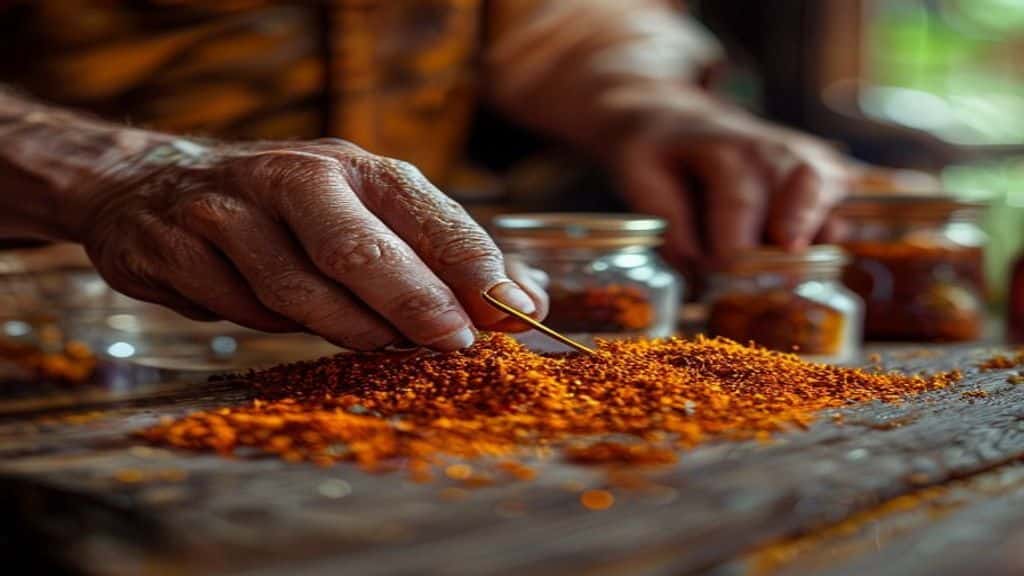
Saffron might be the only spice that feels like holding liquid gold between your fingers. These delicate crimson threads, each no bigger than an eyelash, carry within them the power to transform rice into something transcendent, to turn simple milk into an aromatic dessert worthy of celebration. What is saffron, exactly? It is the dried stigmas of Crocus sativus, a purple flower that blooms for just a few precious weeks each autumn, demanding to be harvested by hand in the early morning hours before the sun can damage its delicate treasure.
The romance of saffron lies not just in its legendary price tag, but in the extraordinary human effort required to bring it from field to kitchen. Picture this: farmers in the mountains of Kashmir wake before dawn, moving through fields of purple crocuses with nimble fingers, plucking three tiny red stigmas from each flower. These stigmas are then carefully dried, concentrating their flavor and preserving their potency. The result is a spice so concentrated that a pinch can perfume an entire pot of paella or transform a simple saffron rice into something that tastes like sunshine distilled.
Where the World’s Finest Saffron Grows
The geography of saffron tells a story of ancient trade routes and perfect microclimates. Iran produces roughly 90% of the world’s saffron, with the provinces of Khorasan yielding threads that food experts consider among the finest available. Here, the combination of hot, dry summers and cold winters creates ideal conditions for the crocuses to develop their intense flavor compounds. Kashmiri saffron, grown in the high-altitude valleys around Pampore, commands premium prices for its deep color and powerful aroma that seems to capture the crisp mountain air itself.
Spanish saffron from La Mancha carries its own distinct character, slightly more subtle than its Persian cousins but with an unmistakable terroir that speaks to centuries of cultivation. Greek saffron from Kozani offers yet another profile, with threads that are often more delicate in appearance but pack surprising intensity. Each region’s saffron reflects not just climate and soil, but generations of farming wisdom passed down through families who understand that the difference between good and extraordinary saffron often comes down to timing the harvest within a matter of hours.
The Labor Behind Every Thread
Understanding what saffron is means appreciating the remarkable human effort behind each purchase. According to the Food and Agriculture Organization, it takes approximately 150 flowers to produce just one gram of saffron threads. A skilled harvester can collect about 150 grams of fresh stigmas per day, which yields roughly 30 grams of dried saffron after processing. This intensive labor, combined with the flower’s brief blooming period, explains why saffron commands prices that can exceed $5,000 per kilogram at wholesale.
How to Recognize Quality Saffron
Real saffron should feel slightly oily between your fingers and release an aroma that food scientists describe as a complex blend of metallic, honey, and hay-like notes with subtle floral undertones. Dr. Maria Rodriguez, a food chemistry professor at UC Davis, explains: “Authentic saffron contains specific compounds like safranal, crocin, and picrocrocin that create its signature sensory profile. These compounds are so distinctive that they serve as chemical fingerprints for quality assessment.”
The threads themselves tell their own story. Premium saffron appears as deep red, trumpet-shaped stigmas with minimal yellow or white portions. Avoid saffron that looks uniformly powdered or contains excessive yellow threads, which indicate either lower-grade processing or potential adulteration. When you steep quality saffron in warm liquid, it should release its color gradually, turning the liquid a beautiful golden yellow while the threads themselves retain much of their red color. If your saffron immediately turns bright orange or the threads lose all color instantly, you might be looking at an inferior product.
Professional chefs often test saffron by placing a few threads in a small dish of warm milk or water. Genuine saffron will slowly release its color and aroma over several minutes, while fake saffron made from turmeric or safflower will either color the liquid immediately or fail to produce saffron’s characteristic honey-metallic scent. Trust your nose – real saffron has a complexity that no substitute can truly replicate.
The Science of Saffron’s Flavor
What makes saffron taste like saffron comes down to a fascinating interplay of chemical compounds that food scientists have only recently begun to fully understand. The primary flavor compound, safranal, develops as saffron dries and creates that distinctive hay-like, slightly metallic taste that can be both bitter and sweet simultaneously. Crocin provides saffron’s golden color, while picrocrocin contributes to its subtle bitterness.
Chef Thomas Keller, renowned for his precision with ingredients, notes: “Saffron is not just about color – it’s about a flavor that bridges sweet and savory in ways that seem almost impossible. A proper pinch can make cream taste more like cream, rice more like rice, but with this ineffable golden quality that nothing else achieves.” This flavor complexity explains why saffron appears in cuisines ranging from French bouillabaisse to Middle Eastern desserts, from Indian biryanis to Scandinavian breads.
According to research published by the National Institutes of Health, saffron’s bioactive compounds may also contribute to its historical use in traditional medicine, though modern cooks value it purely for its culinary magic. The same compounds that create saffron’s distinctive flavor also make it remarkably potent – just a few threads can perfume an entire dish, making even the most expensive saffron surprisingly economical when used properly.
Frequently Asked Questions
How much saffron should I use in cooking?
A general rule is about 10-15 threads per serving, or roughly a pinch for four people. Too much saffron can make food taste medicinal and bitter, so start conservatively. Always steep saffron in warm liquid for at least 10-15 minutes before adding it to your dish.
Can I substitute turmeric for saffron?
While turmeric provides golden color, it cannot replicate saffron’s complex flavor profile. Turmeric tastes earthy and slightly bitter, while saffron offers honey-metallic notes with floral undertones. For color alone, turmeric works, but the flavor will be entirely different.
How should I store saffron to maintain quality?
Store saffron threads in an airtight container away from light and heat. Properly stored saffron can maintain its potency for 2-3 years. Avoid keeping it in the refrigerator, as moisture can damage the delicate threads. A cool, dark pantry works perfectly.
Why does saffron cost so much compared to other spices?
The price reflects the intensive hand-harvesting required and the low yield per flower. Each crocus produces only three stigmas, and these must be picked during a narrow window when flowers first open. This labor-intensive process, combined with limited growing regions, creates natural scarcity.
Is powdered saffron as good as whole threads?
Whole threads are generally superior because they are less likely to be adulterated and retain their flavor compounds better. Powdered saffron can be convenient but is more susceptible to counterfeiting and loses potency faster once ground.
What dishes showcase saffron best for beginners?
Start with simple saffron rice or saffron cream sauces where the spice can shine without competing flavors. These dishes help you understand saffron’s character before moving to more complex preparations like paella or bouillabaisse.
Can I grow saffron at home?
Saffron crocuses can grow in USDA zones 6-8 with well-draining soil and full sun. However, you need approximately 150 bulbs to harvest enough saffron for a few recipes. The bulbs require a cold winter period and take 2-3 years to mature enough for harvesting.
Discover Authentic Saffron for Your Kitchen
Understanding what saffron truly is – from its careful cultivation to its complex flavor profile – makes every dish you create with it more meaningful. Whether you are preparing your first saffron-scented rice or crafting an elaborate feast, having access to genuine, high-quality saffron makes all the difference between a good meal and an unforgettable one. The right saffron threads will transform your cooking with their golden color, distinctive aroma, and that ineffable flavor that has captivated cooks for thousands of years. Shop the Collection to find premium saffron that brings this ancient treasure directly to your kitchen.