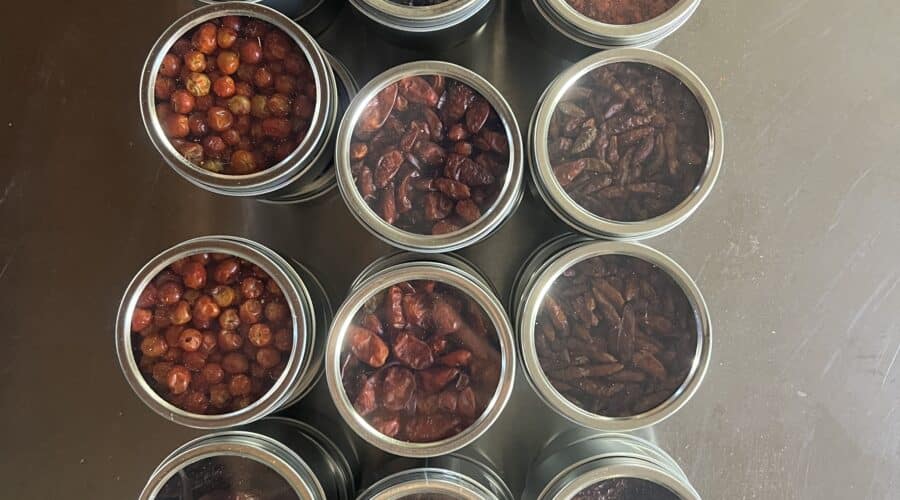
Pequin Pepper Scoville: How Hot Is This Tiny Chile Really?
Pequin peppers measure 30,000 to 60,000 Scoville heat units — 8 to 12 times hotter than a jalapeño. Learn how pequin's heat compares to cayenne, serrano, and habanero, and how to use it without burning your dish.
Chile Pequin: The Complete Guide to Mexico’s Fiery Little Pepper
Pequin peppers register between 30,000 and 60,000 Scoville heat units (SHU) — putting them firmly in upper-medium heat territory, roughly 8 to 12 times hotter than a jalapeño. That’s significant heat for a pepper no bigger than a grain of rice. But the number alone doesn’t tell you what cooking with pequin actually feels like, how its burn compares to other chiles you know, or why it behaves so differently in the kitchen than cayenne, which sits in almost the same range.
This guide breaks down the Scoville science behind pequin, explains the real-world experience of its heat, and gives you practical tools for using it without misjudging the result.
The Pequin Pepper Scoville Range
The standard range cited across horticultural and culinary sources — including PepperScale and New Mexico State University’s Chile Pepper Institute — is 30,000 to 60,000 SHU. This puts pequin in the same neighborhood as cayenne pepper (30,000 to 50,000 SHU), though pequin can run hotter at its upper end and brings considerably more flavor complexity along with the heat.
What most guides don’t explain is why that range is so wide. A pepper’s Scoville measurement isn’t fixed — it’s a snapshot of capsaicin concentration at a specific moment, affected by:
Ripeness at harvest: Red, fully ripe pequins are hotter than green unripe ones. Heat accumulates as the pepper matures.
Soil mineral content: Research cited by NMSU’s Chile Pepper Institute shows peppers grown in mineral-rich volcanic soils develop higher capsaicin concentrations and more pronounced citrus notes.
Growing conditions: Water stress during the growing season tends to increase capsaicin production — drought-stressed plants produce hotter fruit.
Drying method: Drying concentrates flavor compounds but does not increase SHU. A common misconception is that dried pequin is “hotter” than fresh — the heat is more consistent in dried form, but not higher.
There’s also a cultivated variety worth knowing: the NuMex Bailey Piquin, developed by NMSU’s breeding program, registers 50,000 to 100,000 SHU — overlapping with chiltepin territory and significantly hotter than standard wild or commercially grown pequin.
How Pequin Compares on the Scoville Scale
Numbers mean more with context. Here’s where pequin sits relative to peppers most home cooks already have a feel for:
Pepper
Scoville Range
vs. Pequin (avg)
Flavor Character
Bell Pepper
0 SHU
Not comparable
Sweet, no heat
Jalapeño
2,500–8,000 SHU
8–12x milder
Crisp, grassy
Serrano
10,000–23,000 SHU
3–4x milder
Sharp, bright
Cayenne
30,000–50,000 SHU
Similar
Clean, one-dimensional heat
Pequin
30,000–60,000 SHU
Benchmark
Smoky, fruity, slow-building
NuMex Bailey Piquin
50,000–100,000 SHU
Hotter variant
Sharper, less fruity
Chiltepin
50,000–100,000 SHU
Up to 2x hotter
Earthy, fast burst
Tabasco Pepper
30,000–50,000 SHU
Similar
Vinegary, sharp
Habanero
100,000–350,000 SHU
3–6x hotter
Fruity, intense throat heat
The comparison to cayenne is worth unpacking. Both sit in a similar heat band, and cayenne is the most common substitute people reach for. But tasting them side by side reveals just how different they are. Cayenne is clean, sharp, and mostly one-dimensional — its heat is its main contribution. Pequin delivers heat alongside smoky, fruity, citrusy flavor notes that make the experience feel layered rather than just hot. The Cholula brand hot sauce uses piquin (alongside chile de árbol) precisely because of this complexity — cayenne would give them a duller product.
What Makes Pequin’s Heat Feel Different
Heat level on the Scoville scale measures capsaicin concentration, but it doesn’t capture how that capsaicin is delivered — and delivery matters enormously in cooking and eating.
Pequin’s heat is characterized by a slow build with a wide, mouth-filling burn that lingers for around 15 minutes. This is distinctly different from habanero, which concentrates heat at the back of the throat and dissipates faster. It’s also different from jalapeño, which gives an immediate front-of-mouth sharpness that fades within minutes.
For cooking, this slow-build character has practical implications:
Add early in long-cooked dishes: When pequin simmers in a soup, stew, or bean pot for 30+ minutes, the heat integrates smoothly into the dish. The slow release means the heat distributes evenly through the liquid rather than sitting as a sharp spike.
Add late for presence: Crushed pequin sprinkled on at the end of cooking — or at the table — stays sharper and more present. You taste the pepper directly rather than as background heat.
Taste and wait before adding more: Because the heat builds gradually, tasting immediately after adding pequin will always underestimate the final result. Wait 5 to 10 minutes before deciding whether to add more.
Using Pequin’s Heat Level Practically
Starting Amounts for Common Applications
If you’re new to cooking with pequin, these starting points will keep you from overshooting:
Soup or stew (4 servings): 2 to 3 whole dried pequins added at the start of cooking — remove before serving or leave in for adventurous guests
Salsa (makes about 1 cup): 6 to 10 dried whole peppers for medium-hot; scale up slowly
Crushed as a table condiment: ¼ teaspoon per serving as a starting point — similar to a generous pinch of red pepper flakes
Ground in a dry rub: ½ to 1 teaspoon per pound of meat for noticeable but manageable heat
Hot sauce (per cup of liquid): ¼ to ½ cup dried whole peppers depending on desired heat level
If You Overshoot the Heat
Capsaicin is fat-soluble, not water-soluble — water won’t reduce the burn in a dish. If you’ve added too much pequin to a recipe, here are your options:
Add dairy: Sour cream, cheese, or crema in or alongside the dish will bind capsaicin compounds and reduce perceived heat
Add acid: Lime juice or vinegar brightens the dish and psychologically counterbalances heat
Dilute: Double the other ingredients if possible — more tomatoes, more broth, more beans
Add fat: A drizzle of oil or a pat of butter helps disperse capsaicin and reduce the sharpest edges of the heat
Handling Pequin Peppers Safely
The capsaicin concentration in pequin is high enough to cause significant skin and eye irritation. Wear nitrile gloves when handling large quantities — latex doesn’t block capsaicin effectively. Avoid touching your face. Use a dedicated cutting board. If skin contact occurs, wash with dish soap (the surfactants break down capsaicin oil) rather than plain water.
Common Myths About Pequin Pepper Heat
Myth: Dried pequin is hotter than fresh
Drying concentrates flavor compounds but does not increase the Scoville measurement. What drying does do is make the heat more consistent and predictable than fresh pequin, which can vary significantly between individual peppers and harvests. Dried pequin also delivers its capsaicin more slowly when cooking, as the dried flesh rehydrates during simmering.
Myth: Small peppers are always extremely hot
Size doesn’t correlate with heat. Pequin (½ to ¾ inch) is noticeably milder than a habanero, which is considerably larger. And a bell pepper the size of your fist has zero heat. What matters is capsaicin concentration within the variety, not physical dimensions.
Myth: Removing seeds removes all the heat
The seeds themselves contain very little capsaicin — the heat is concentrated in the white pith (placental tissue) surrounding the seeds. Removing seeds and pith can reduce heat by 30 to 50%, according to culinary food science sources, but removing seeds alone has minimal effect. For a small pepper like pequin, separating pith from seeds is often impractical — if heat reduction matters, use fewer peppers instead.
Frequently Asked Questions
Is pequin hotter than serrano?
Yes, significantly. Serrano peppers range from 10,000 to 23,000 SHU, while pequin starts at 30,000 SHU and can reach 60,000. A hot pequin can be 3 to 6 times hotter than a serrano. The flavor profiles are also very different — serrano is sharp and bright, pequin is smoky and fruity.
What peppers are in Cholula hot sauce?
Cholula lists piquin peppers and chile de árbol among its primary ingredients, along with water, salt, vinegar, garlic powder, spices, and xanthan gum. The piquin contributes fruity complexity while the árbol provides a cleaner, sharper heat.
Does pequin pepper burn skin?
Yes. The capsaicin concentration in pequin is high enough to cause noticeable skin irritation, particularly on sensitive areas. Wear nitrile gloves when handling large amounts. If oil gets on skin, wash with dish soap and cool water. Dairy products (not water) are most effective for relieving capsaicin burns.
How does pequin compare to Tabasco sauce peppers?
Tabasco peppers (used in the original Tabasco sauce) range from 30,000 to 50,000 SHU — nearly identical to the lower end of the pequin range. The main difference is flavor: Tabasco peppers are sharp and somewhat vinegary-tasting, while pequin brings smoky and fruity notes.
Can I use pequin in place of cayenne in recipes?
Yes, with adjustments. Use about ¾ the amount of pequin compared to cayenne (pequin can run hotter at its ceiling). Account for the flavor difference: cayenne adds heat with minimal flavor contribution, while pequin adds heat and smokiness. In dishes where cayenne is just a heat additive — like a basic spice rub — pequin works as a more flavorful upgrade. In dishes built around cayenne’s specific neutral heat character, the flavor difference will be noticeable.
The Bottom Line on Pequin Pepper Heat
At 30,000 to 60,000 SHU, pequin sits in meaningful but manageable heat territory — hot enough to command respect, mild enough that a careful cook can control it. What separates it from other peppers in the same range is what comes alongside the heat: the smoky, fruity, citrusy flavor profile that makes small amounts go a long way in the right dish.